
Medical Supply Distribution Warehouse Racking: Premier Medical Distribution
In medical distribution the rack layout is part of your quality system. Lot control, expiry dating, product integrity and traceability all depend on where a pallet sits and which one comes out first. Manufacturers of dated product face the same problem one step earlier in the chain — see our supplement manufacturing warehouse racking case study. Providers that rent equipment rather than ship it face a different problem again — see our home medical equipment warehouse racking case study. A national animal health distributor faces a related but broader multi-channel storage problem — see our veterinary and animal health products distribution warehouse racking case study. A medical device manufacturer’s own component warehouse is a related but different storage problem — see our medical device manufacturing warehouse racking case study. Not every healthcare-related warehouse is a distributor moving product to facilities — a supplemental health-benefits fulfillment center instead kits and ships directly to individual plan members, a high-volume, small-parcel operation with its own storage logic; see our health benefits fulfillment center warehouse racking case study.

2022
Year Premier Medical worked with us on rack
Medical distribution
Supplies and devices for healthcare customers
Pallet rack
Product category we supplied
FIFO by design
Rotation built into the rack, not the process
Plan your layout before you buy
Configure upright height, beam width, bay count, and load levels in our free 3D Pallet Rack Designer, then get an instant bill of materials and request a quote.
The project
Premier Medical Distribution distributes medical supplies to healthcare customers. Material Handling USA supplied pallet rack for the company in 2022. The client, that year and the product category supplied are the only project details we publish.
Medical distribution has one characteristic that changes storage design more than volume, mix or throughput ever will: nearly everything in the building has a date on it, and much of it has a lot number that must be traceable to the customer who received it. Storage stops being a question of “how many pallets fit” and becomes a question of “can we always take the right pallet, prove which one we took, and show the product was kept in condition”.
That is a design brief a warehouse can meet with steel and layout, not just with software. Below is how we plan pallet rack systems for a medical supply and device distributor, and what to insist on when specifying one.
What we publish
We publish the client, the year we worked together and the product category supplied. We never publish facility layouts, room dimensions, inventory quantities, customer names or contract values.
Why medical warehousing is different
Four constraints separate a medical distribution warehouse from general distribution, and each one has a rack consequence.
| Constraint | What it means day to day | Rack consequence |
|---|---|---|
| Expiry dating | Product has a shelf life and a customer-acceptable remaining life | Rotation has to be structural, not a picking instruction |
| Lot traceability | Every lot must be findable, and separable, at short notice | Locations must be addressable to a level that maps to lots |
| Product integrity | Sterile barriers and packaging are the product’s protection | No crushing, no pallet overhang, decked levels, controlled handling |
| Recall and quarantine | Suspect stock must be isolated quickly and provably | Designated, bounded, controlled hold locations built into the layout |
| Mixed pick units | Pallets, cases and eaches leave the building daily | Layered storage: pallet reserve, case pick, piece pick |
| Regulatory inspection | The facility is audited, not just the paperwork | Housekeeping, labelling, capacity signage and condition all count |
The last row is worth underlining. In a medical distribution audit, the physical warehouse is evidence. Damaged rack, unlabelled locations, unposted capacities, product stored on the floor next to a wall or stacked over a sprinkler clearance line all read as control failures — regardless of what the quality manual says.
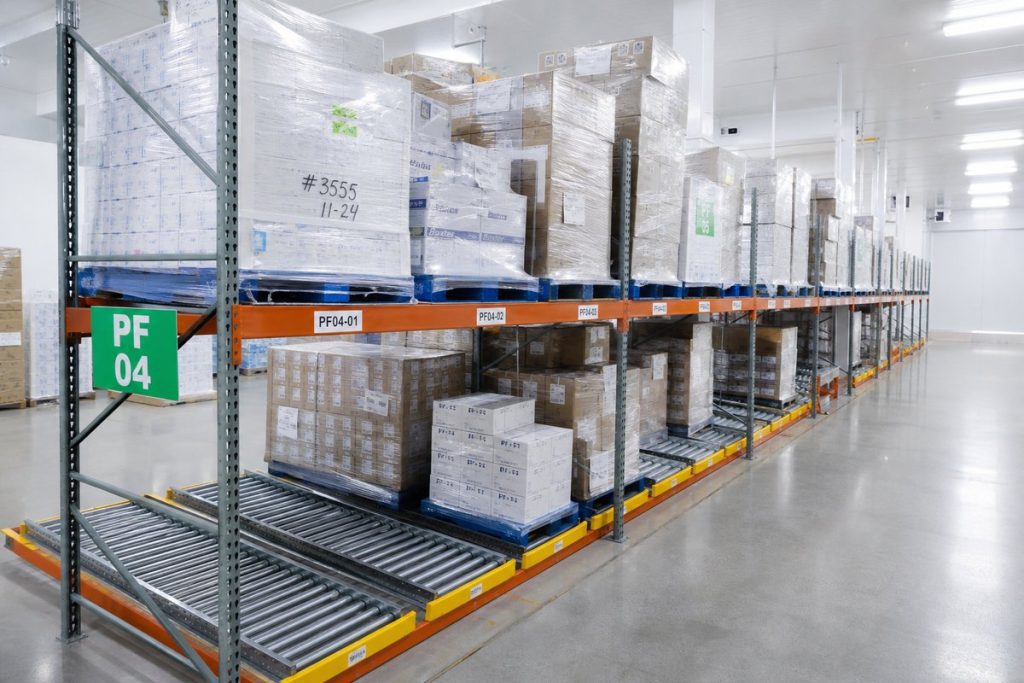
Rotation: build FIFO into the rack
Every dated-product warehouse has a rotation policy. The difference between the ones that hold and the ones that quietly leak expired stock is whether the rotation is enforced by the structure or by the person on the forklift at 4pm on a busy Friday.
Pallet flow rack enforces it physically. Pallets are loaded at the back onto inclined roller lanes and picked from the front, so the oldest pallet in a lane is the only one available. For a fast-moving item with real depth, this is the single most reliable rotation control available — and it removes travel at the same time, because loading and picking happen on different faces.
The trade is depth per SKU: a flow lane pays for itself when a product has enough pallets to fill it. Items with two or three pallets do not belong in deep lanes.
Push-back rack is last-in first-out by design, so it suits product families where rotation is managed by lot within a short window rather than strict FIFO — for example, bulk non-dated consumables, packaging or a staging buffer. Putting dated product into push-back and relying on discipline to rotate it is exactly the arrangement that produces write-offs.
Selective rack stays the backbone for the long tail. It gives one hundred per cent access, which is what lot separation and slow movers need, and it is the easiest configuration to re-slot when the product mix changes.
Rotating dated or lot-controlled stock?
We design pallet flow, carton flow and selective racking around the way your product is actually dated and picked.
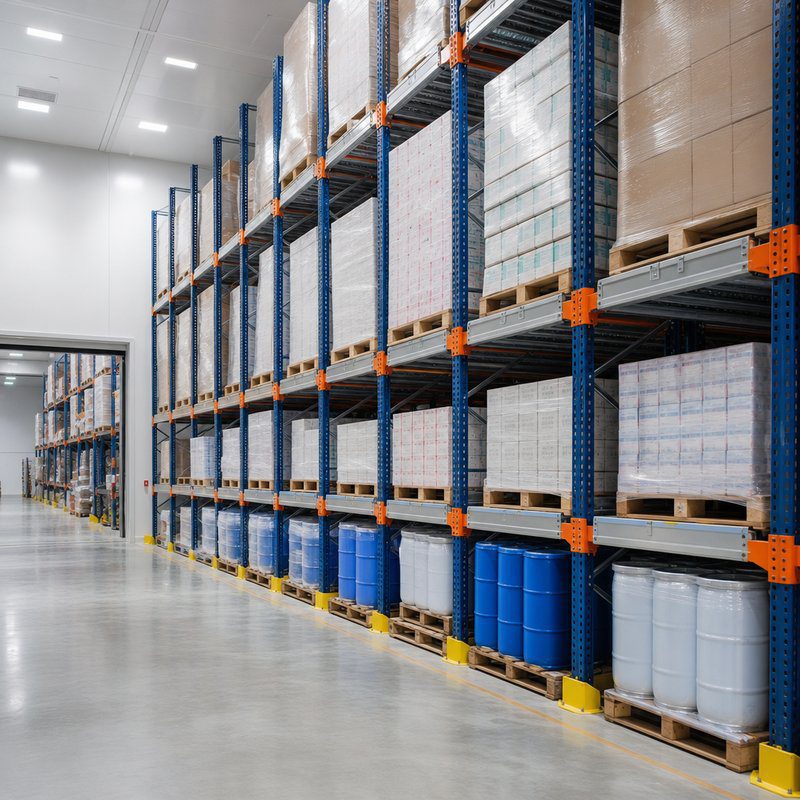
Lot control and traceability start with the location scheme
Traceability is usually discussed as a software capability. In practice it is limited by physical addressing: a system can only record what the warehouse can distinguish.
Address to the level, not to the bay. If two lots of the same item share a bay with one address, they are one record. Level-and-position addressing is what allows a lot to be picked and proven separately.
Keep one lot per position where you can. The discipline costs positions and saves recalls. Where mixing is unavoidable, make the mixed position visually obvious rather than technically documented only.
Design the quarantine area in, and bound it. Hold, quarantine and returned-goods areas need to be real locations — marked, addressed, and physically separate enough that nothing drifts back into pickable stock. A caged or fenced area is the clearest form of this.
Label at eye level and at floor level. Bay labels that can only be read from a forklift slow every audit, every cycle count and every new employee.
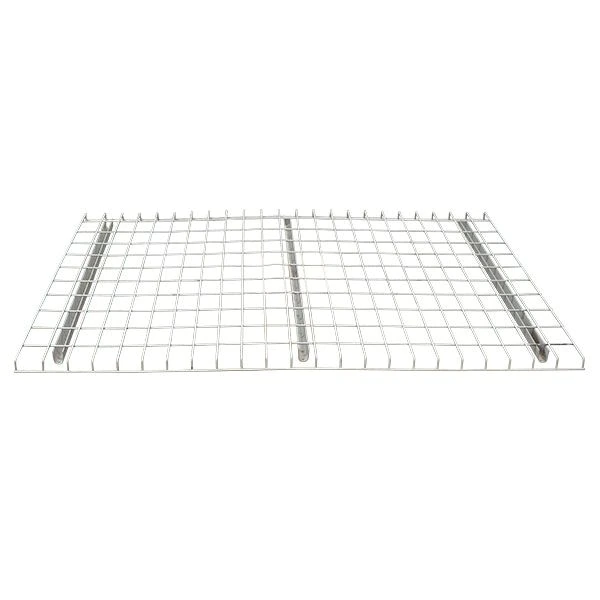
Deck the levels. Full-width wire decking lets a part pallet, a loose case or an odd-footprint carton sit safely in a position — a constant reality in medical distribution, where a lot rarely finishes as a neat full pallet. Open wire decking also keeps sprinkler discharge paths clear in a way solid decks can obstruct.
Product integrity: the packaging is the product
For sterile devices and many medical supplies, the package is the protection. A crushed carton is not a cosmetic problem — it is a compromised sterile barrier, and it becomes scrap. Storage design either protects that barrier or attacks it.
- No overhang. A pallet that overhangs its beams transfers load to the carton edges — deck the level and size the bay to the real pallet footprint.
- No stacking of light cartons under heavy ones inside a position; store dense product low and light packaged goods above.
- Set beam elevations with real clearance for placement, so an operator is not scraping a load into a bay.
- Deck every level where part pallets, loose cases or unstable footprints will occur.
- Keep pick faces at working height for hand picking so cases are lifted, not dragged.
- Guard the aisle ends and door approaches so a struck upright never becomes a dropped load.
Environment matters as much as structure. Where product is temperature- or humidity-sensitive, the rack layout has to respect the air path of the conditioning system: solid blocks of stacked pallets against a wall create dead zones with real temperature differences. Where narrow aisle racking is used to buy density, the trade is that a single disabled truck blocks an entire aisle — acceptable in many operations, but it should be a decision rather than a surprise.
Sterile, controlled and high-value goods
Most medical distributors carry a subset of inventory that needs more than a location: high-value devices, controlled items, implantables and consignment stock. The storage answer is not a different rack — it is a bounded area with controlled access inside the same building, so the goods stay in the normal flow while remaining accountable.
Small, high-value, piece-picked items are also the classic case for shelving rather than pallet positions. A device that ships one at a time should not occupy a pallet location, and it should not be picked from height. A parts and small-item shelving aisle beside the pack bench keeps those picks short and controlled.
Case-pick medical consumables — gloves, dressings, syringes, disposables — are the natural home for carton flow: a replenished-from-behind, picked-from-the-front pick face that keeps FIFO intact at the case level and puts a compact pick face in front of the picker.
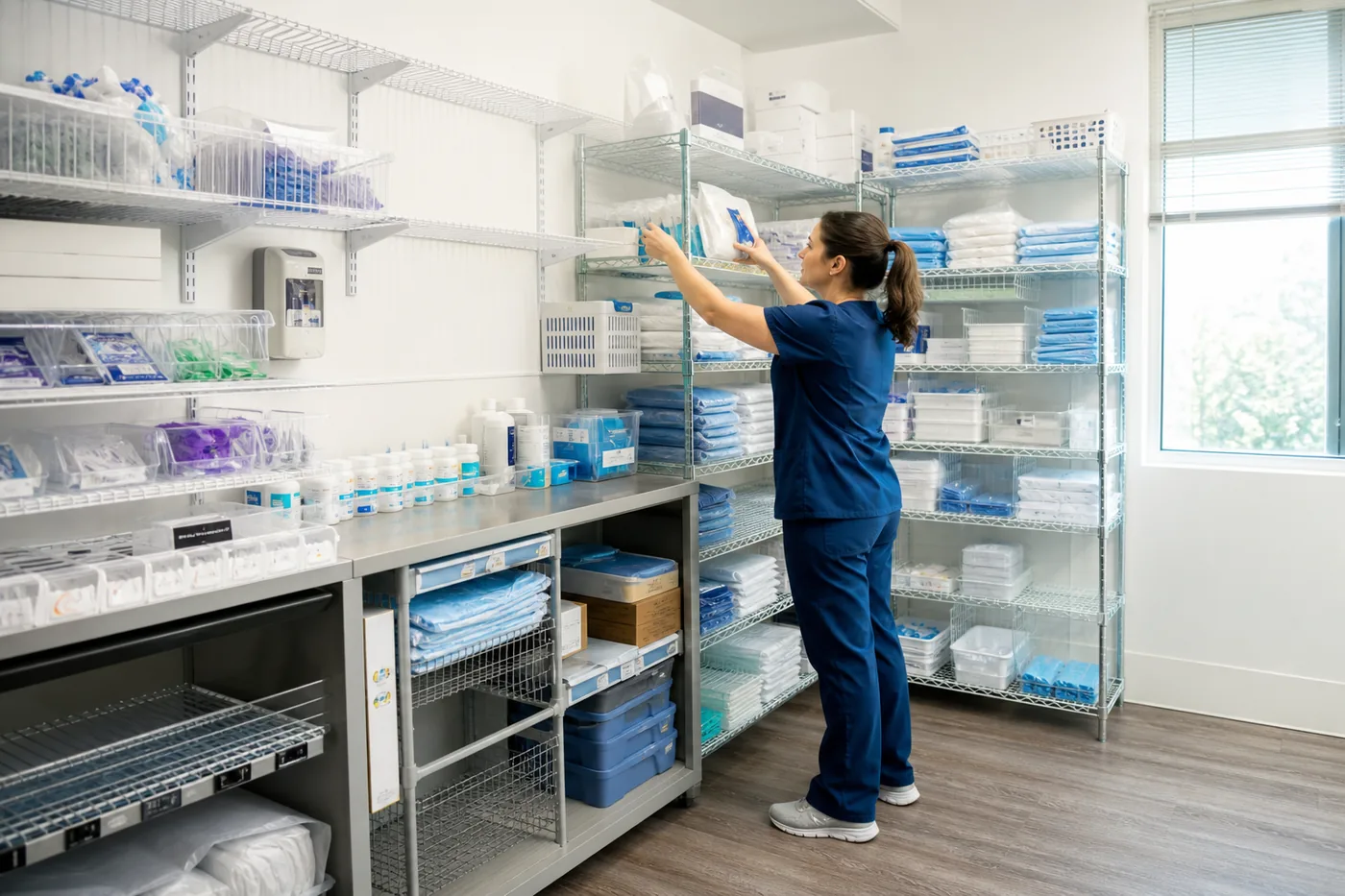
Distributors whose customers are hospitals and clinics are ultimately supplying rooms like the one pictured. It is worth designing the warehouse so what leaves it can be received, stored and rotated on the other end without repacking — see our healthcare material handling solutions for that side of the chain.
Code, installation and inspection
Three technical requirements apply to any distribution rack installation, and they are enforced harder in an audited facility.
Fire protection. Rack layouts preserve transverse flues at the uprights and a longitudinal flue between back-to-back rows, so sprinkler water can reach a fire inside the storage array. Commodity classification, packaging and storage height feed the sprinkler design — adding a beam level or changing what is stored can move the installation outside its design basis.
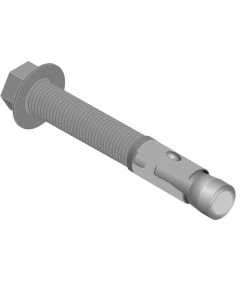
Seismic design. Storage racks above a defined height are treated as non-building structures with seismic design requirements under the International Building Code adopted locally, and rack design follows ANSI MH16.1. Anchor type, size, embedment and count come from the rack engineer’s drawings for the actual slab and configuration.
Documented installation and inspection. Plumb columns, verified beam engagement, correct torque and a documented handover with posted load capacities are what a professional rack installation produces. After that, a documented inspection interval plus an immediate report-and-unload rule for damage keeps the system in its designed condition, and rack repair restores engineered capacity where damage is found. In an audited warehouse this documentation is not overhead — it is evidence.
Column guards and end-of-row protection at doors, aisle ends and corners are the cheapest way to keep that record clean.
Shop Pallet Rack Accessories Online
Protect and finish your pallet rack installation with these in-stock accessories, or request a quote for custom-sized rack, freight and volume pricing.

Medical distribution warehouse racking FAQs
What kind of pallet racking suits a medical supply distributor?
How do you enforce FIFO in a warehouse with dated stock?
How does rack design support lot traceability?
Where should quarantine and returned goods be stored?
Why does wire decking matter in medical distribution?
How do you protect sterile packaging in storage?
Do storage racks in a distribution warehouse need seismic engineering?
Planning a medical or device distribution warehouse?
We design, supply and install selective, pallet flow and narrow aisle racking across the Intermountain West, including Utah.
Utah pallet rack project: This case study supports our Utah pallet rack design and installation guide and, at the top level, our main pallet rack systems hub.
Storage That Stands Up to an Audit
Material Handling USA designs, supplies and installs pallet rack for medical, device and healthcare distribution operations across Utah and the Intermountain West.