
Beverage Production Warehouse Racking: Refresco
A bottling plant produces faster than it ships. The warehouse has to absorb full production runs without ever becoming the reason a line stops — and it has to release them in date order.
2020
Year Refresco worked with us on rack
Beverage production
Bottling and packaged drinks
Pallet rack
Product category we supplied
Line-paced storage
The warehouse runs at the speed of the filler
Plan your layout before you buy
Configure upright height, beam width, bay count, and load levels in our free 3D Pallet Rack Designer, then get an instant bill of materials and request a quote.
The project
Refresco is a beverage manufacturer and bottler. Material Handling USA supplied pallet rack for the company in 2020. The client, that year and the product category supplied are the only project details we publish.
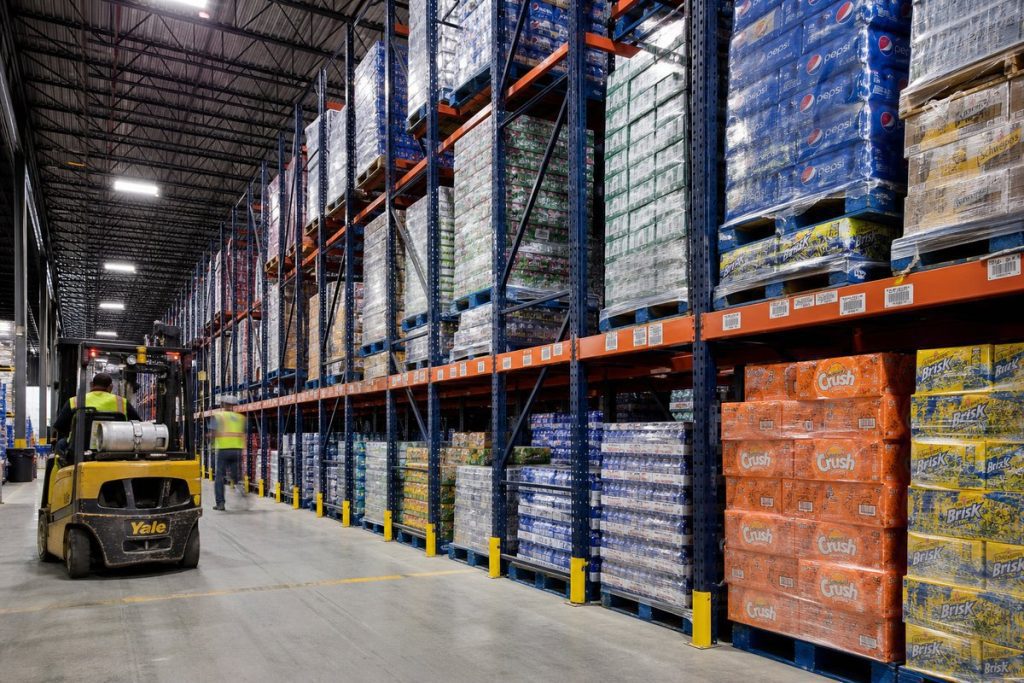
Beverage production has a storage profile unlike almost anything else in distribution. A filling line produces one item, continuously, at a rate that has nothing to do with how fast that item ships. Product is dense, heavy, dated, and often stored on pallets that were built by a machine and stretch wrapped a few seconds later. Warehouse design is therefore a buffering problem first and a picking problem second: the racking exists to absorb production surges without the plant ever having to slow down.
Below is how we plan pallet rack systems and gravity flow racks for a beverage production and packaging operation, and the design questions worth settling before anything is ordered.
Why beverage warehouse racking is a different problem
Six characteristics drive the design, and most of them push in the direction of depth rather than selectivity.
| Characteristic | What it looks like in the plant | Rack consequence |
|---|---|---|
| Few SKUs, huge volume | One run makes hundreds of identical pallets | Deep lane storage pays; one-deep selective wastes floor |
| Heavy, dense loads | Liquid in glass, cans or PET is near the top of pallet weights | Beam and frame capacity, not cube, sets the configuration |
| Date codes on everything | Production and best-before dates travel with every pallet | Rotation must be structural where depth is used |
| Machine-built pallets | Consistent footprint, but wrap quality decides load stability | Deck levels and control load overhang; do not rely on wrap |
| Production surges | The line does not stop because the warehouse is full | Buffer capacity sized for a full run, not average inventory |
| Sanitation regime | Floors are washed, spills happen, pests are audited | Clear floor lines, clean flues, no permanent floor-stacked product |
Two of these interact in a way that decides most beverage layouts. Low SKU count with high volume argues for deep-lane, high-density storage; date coding argues for first-in first-out. Any system that gives you depth while breaking rotation transfers the risk from the warehouse to the customer, and eventually to a write-off.

Density without losing rotation
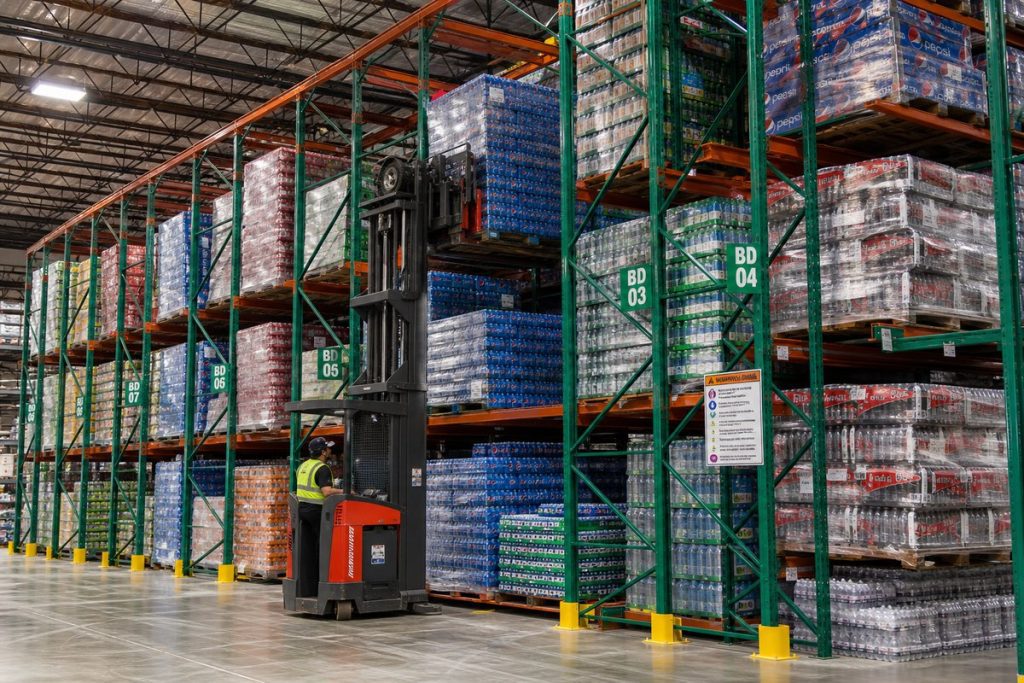
Pallet flow rack is the natural fit. Pallets are loaded onto inclined gravity lanes at the back and picked from the front, so the oldest pallet in the lane is the only one available. You get deep-lane density and true first-in first-out rotation from the same structure, and the loading and picking faces are separated, so a lift truck putting away a production run never queues behind one loading a trailer. For a plant running full pallets of a small number of items, this is usually the highest-value storage in the building. Our guide to pallet flow racking systems covers lane depth, speed controllers and braking in more detail.
Push-back rack buys density more cheaply, but it is last-in first-out. Within a single production run that is often irrelevant — every pallet in the lane carries the same date code, so lane-level rotation is enough. Mixing dates in a push-back lane is where it goes wrong.
Drive-in rack is the cheapest density per pallet position and suits large blocks of one item, at the cost of slower handling and more contact between truck and structure. In a beverage plant its best use is seasonal or bulk buffer storage rather than the daily shipping face.
Selective rack is still needed — for the slow tail, for short runs, for customer-specific packs, for materials and packaging inventory, and for anything that needs to be reached without moving three other pallets.
Buffering a production line?
We design pallet flow, push-back and selective racking around your run sizes and date-code rules.
Loads, wrap and pallet quality decide what is possible
Deep-lane storage is unforgiving about load quality in a way one-deep selective racking is not. A pallet that has to travel down a flow lane, or be pushed back along a cart, must be able to take that handling without shifting.
Pallet condition is a structural input. In gravity systems the bottom deck boards run on the rollers; a broken board or a protruding nail is a lane stoppage. Where pallet quality is mixed — typical for returned or customer-supplied pallets — specify the system for the worst pallet you will actually use, or keep those pallets out of the flow lanes entirely.
Wrap is containment, not structure. Stretch wrap holds a load together; it does not make an overhanging load safe or a tall load stable. Overhang beyond the beams transfers load to the carton edges and, in flow lanes, catches on lane guides.
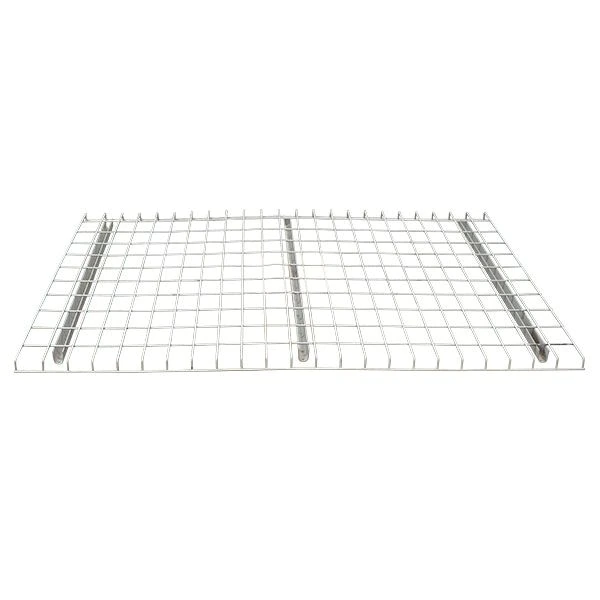
Deck the levels that need it. Full-width wire decking supports part pallets, damaged-pallet transfers and odd footprints, prevents items falling into the aisle, and keeps sprinkler paths clearer than solid decking.
Design for the heaviest realistic pallet. Glass, aluminium cans and PET differ enormously in weight per pallet. Sizing beams from an average when a proportion of the inventory is glass is how a beam level ends up quietly over capacity.
Layout: from filler to trailer
The best beverage warehouse layouts are drawn from the line outward, not from the walls inward.
- Put the deepest, highest-turn storage closest to the line discharge, so the longest travel is done by the item that moves least.
- Separate the put-away path from the pick-and-load path. Gravity flow lanes do this structurally; every other system needs it designed into the aisle plan.
- Size the staging floor for a full production run plus a shift of shipping, so a late trailer never backs up into the plant.
- Keep dock approach aisles clear of storage. Floor-stacked overflow at the dock is the most common cause of both damage and pick errors.
- Give quality hold and returned product its own bounded, addressed location rather than a corner of the floor.
- Label bays so they can be read from the seat of a truck and from the floor — date-coded stock is only rotatable if it is findable.
Empty pallets, empty kegs, packaging and shrink film also need designed homes. In most plants they end up wherever there is space, which is invariably the space that was meant to be an aisle. Giving them proper positions is cheaper than losing a dock approach.

Sanitation, fire protection and cold
Sanitation. A food-grade plant is audited on what an inspector can see. Racking helps or hurts that: getting product off the floor, keeping a clear inspection lane at walls, and choosing finishes that can be wiped down all make the audit easier. Open wire decking is easier to clean and inspect than solid shelves, and clear floor lines around uprights let a scrubber reach the base plates instead of leaving a rim of residue.
Fire protection. Beverage storage is a well-known sprinkler design case — the commodity classification depends heavily on packaging, because plastic bottles and their packaging behave very differently in a fire from cans or glass. Rack layouts must preserve transverse flue spaces at the uprights and a longitudinal flue between back-to-back rows so water can reach a fire inside the array. Changing packaging format, adding a beam level or raising storage height can all move an installation outside its sprinkler design basis; that is a conversation to have with the fire protection engineer before, not after.
Cold and condensation. Where product is chilled, air has to move through the array, so blocking a wall with solid stacked pallets creates dead zones. Steel that cycles between chilled and ambient conditions also sees condensation, which is worth considering when specifying rack finish for a cold room.
See our food and beverage storage solutions overview and the food warehouse storage guide for the wider picture.
Safety, code and keeping the system in its designed condition
Impact protection. High-throughput beverage warehouses see more truck movements per storage position than almost any other operation, and deep-lane systems put trucks in contact with structure by design. Column guards, end-of-row protection and lane guides at aisle ends, dock approaches and every flow or drive-in entry are not optional extras here.
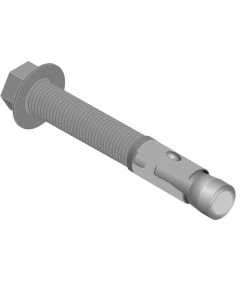
Seismic design. Storage racks above a defined height are non-building structures with seismic design requirements under the International Building Code as adopted locally, with rack design to ANSI MH16.1. Beverage pallets are heavy, so seismic forces are correspondingly high; anchor type, size, embedment and count come from the rack engineer’s drawings for the actual slab and configuration.
Installation and handover. Plumb columns, verified beam engagement, correct anchor torque, commissioned flow lane speeds and posted load capacities are what a professional rack installation delivers.
Inspection. A documented inspection interval, an immediate unload-and-report rule for damage, and rack repair that restores engineered capacity are what keep a heavily worked beverage installation safe over its life. Flow lanes add their own checks: roller condition, brake function and lane guide alignment.
What we publish
We publish the client, the year we worked together and the product category supplied. We never publish facility layouts, room dimensions, production or inventory volumes, or contract values.
Shop Pallet Rack Accessories Online
Protect and finish your pallet rack installation with these in-stock accessories, or request a quote for custom-sized rack, freight and volume pricing.

Beverage warehouse racking FAQs
What is the best racking for a beverage production warehouse?
How do gravity flow racks keep FIFO in a bottling plant?
Is push-back rack acceptable for dated beverage product?
How heavy are beverage pallets and why does it matter?
Does pallet quality affect flow rack performance?
What does racking have to do with a food safety audit?
How does packaging type affect fire protection in a beverage warehouse?
Planning storage for a plant or bottling operation?
We design, supply and install pallet flow, push-back and structural racking across the Intermountain West, including Utah.
Utah pallet rack project: This case study supports our Utah pallet rack design and installation guide and, at the top level, our main pallet rack systems hub.
Storage That Keeps the Line Running
Material Handling USA designs, supplies and installs pallet rack and gravity flow systems for beverage, food and packaging plants across Utah and the Intermountain West.