
Backflow Preventer Cages for Commercial, Fire and Irrigation Assemblies
How property owners, contractors, schools and water users protect above-ground backflow assemblies from brass theft, vandalism and vehicle damage — cage types, sizing, tester access, anchoring, freeze protection and the fire and water rules to check first.
Supplied nationwide from Salt Lake City — call (800) 326-4403.

Brass theft
Stops assemblies being cut off the riser
Testable
Hinged lid or gate for the annual test
Anchored
Bolted to the pad with tamper-resistant fasteners
Custom fit
From small irrigation units to large fire assemblies
Why backflow preventers get stolen, and what a cage does
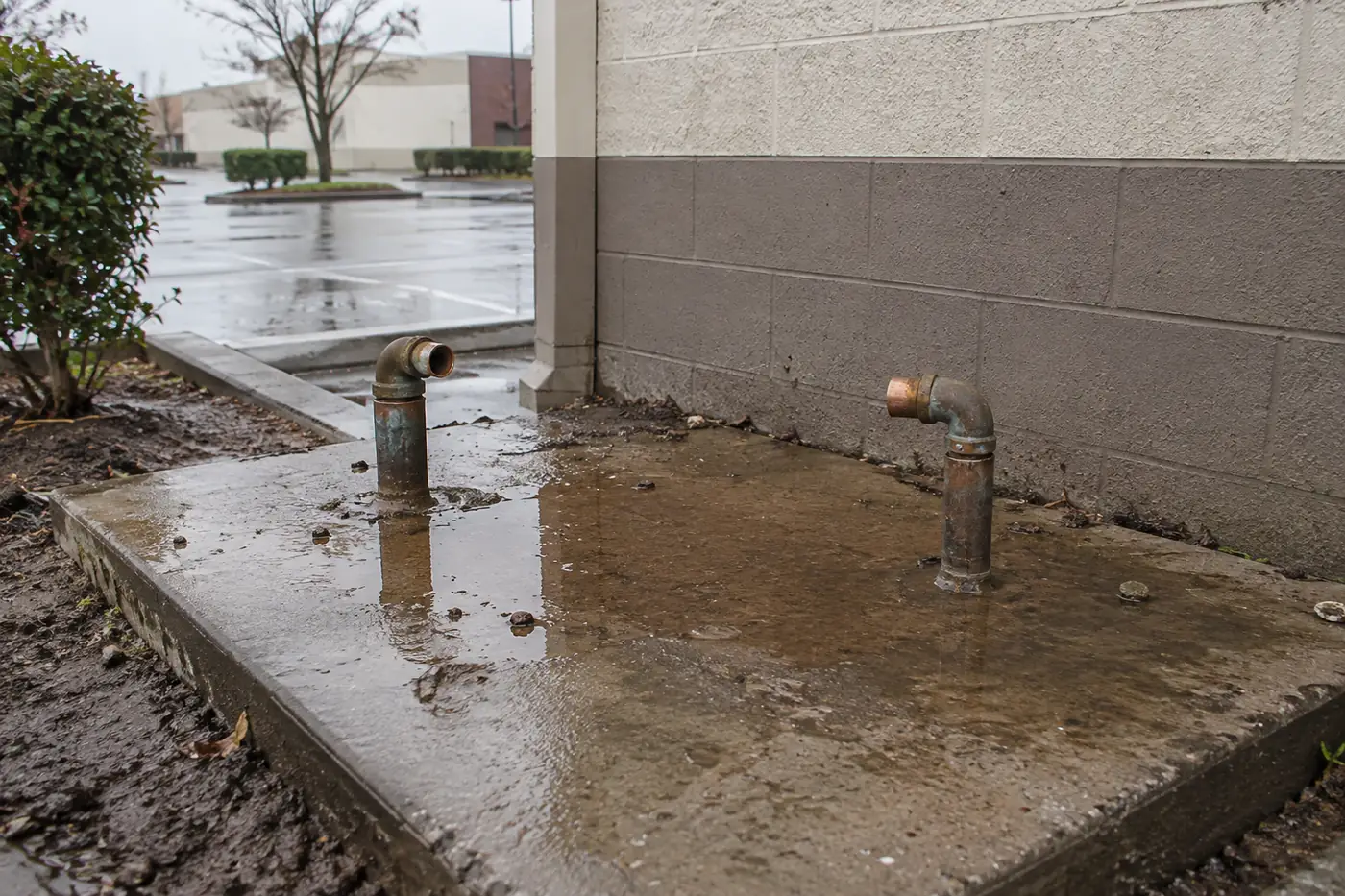
A backflow preventer keeps water from a building, sprinkler system or irrigation line from flowing back into the public supply. Most commercial assemblies sit above ground on two risers near a parking lot, a curb or a landscaped strip, and most of them are made of brass or bronze. That combination makes them one of the easiest metal-theft targets on a property: a thief with a saw can take the whole assembly in a few minutes and sell it for scrap.
The scrap value is small next to the real cost. A stolen or broken assembly leaves the building without domestic water or fire protection, sends water across the site until the service is shut off, and needs a licensed plumber, a new assembly and a passing test before service is restored. A backflow preventer cage is a lockable steel enclosure, anchored to the pad, that keeps the assembly in place and in service while leaving it open to air, inspection and testing. It is one of the most common outdoor jobs in our security cages range.
What a backflow cage protects against
- Brass and bronze theft: the assembly, valves and fittings cut off the risers.
- Vandalism and tampering: shutoff valves closed, test cocks opened or bodies struck.
- Vehicle and equipment damage: parking-lot bumps, mowers and snowplows hitting the risers.
- Unauthorized use: people tapping the line or using the assembly as a step or seat.
- Downtime: loss of domestic water or fire sprinkler supply until it is replaced and tested.
Types of backflow cage and enclosure
“Backflow cage” and “backflow enclosure” are used for several different products. The choice depends on the assembly size, the climate and how often someone needs to get inside:
| Option | Best for | Strengths | Watch for |
|---|---|---|---|
| Lift-off steel cage | Irrigation and small domestic assemblies | Low cost, no hinges to attack, quick to install | Weight and handling at every test |
| Hinged-lid steel cage | Mid-size domestic and commercial assemblies | Fast tester access, base stays anchored | Hinge and hasp design must resist prying |
| Walk-in mesh cage | Fire sprinkler, detector and multi-assembly pads | Room to work inside, one lock for everything | Pad size, gate swing and fire department access |
| Insulated enclosure | Freezing climates where the assembly must stay in service all winter | Freeze protection, hides the assembly | Drainage, heat source, ventilation and cost |
| Cage plus insulated cover | Mild climates with short freezes | Security of steel with a removable insulating layer | Cover must not block drainage or relief discharge |
Steel cages are made from welded wire mesh, expanded metal or square bar. Mesh gives the smallest opening and keeps hands and tools away from the valves; bar gives the most open look. For cages around other site equipment, see our outdoor security cages guide and the dedicated AC unit security cages page.
Where backflow cages are used
Fire sprinkler service lines
Warehouses, plants, offices and apartment buildings with fire sprinklers often have a large double check or reduced pressure detector assembly outside, with big gate valves on ductile iron pipe. These assemblies are expensive, and losing one takes the sprinkler system out of service. A walk-in mesh cage with a personnel gate gives room to operate valves, read gauges and run the forward flow test. Coordinate the lock with the fire department and your sprinkler contractor before installation, so emergency access is never delayed.

Irrigation at schools, parks and campuses
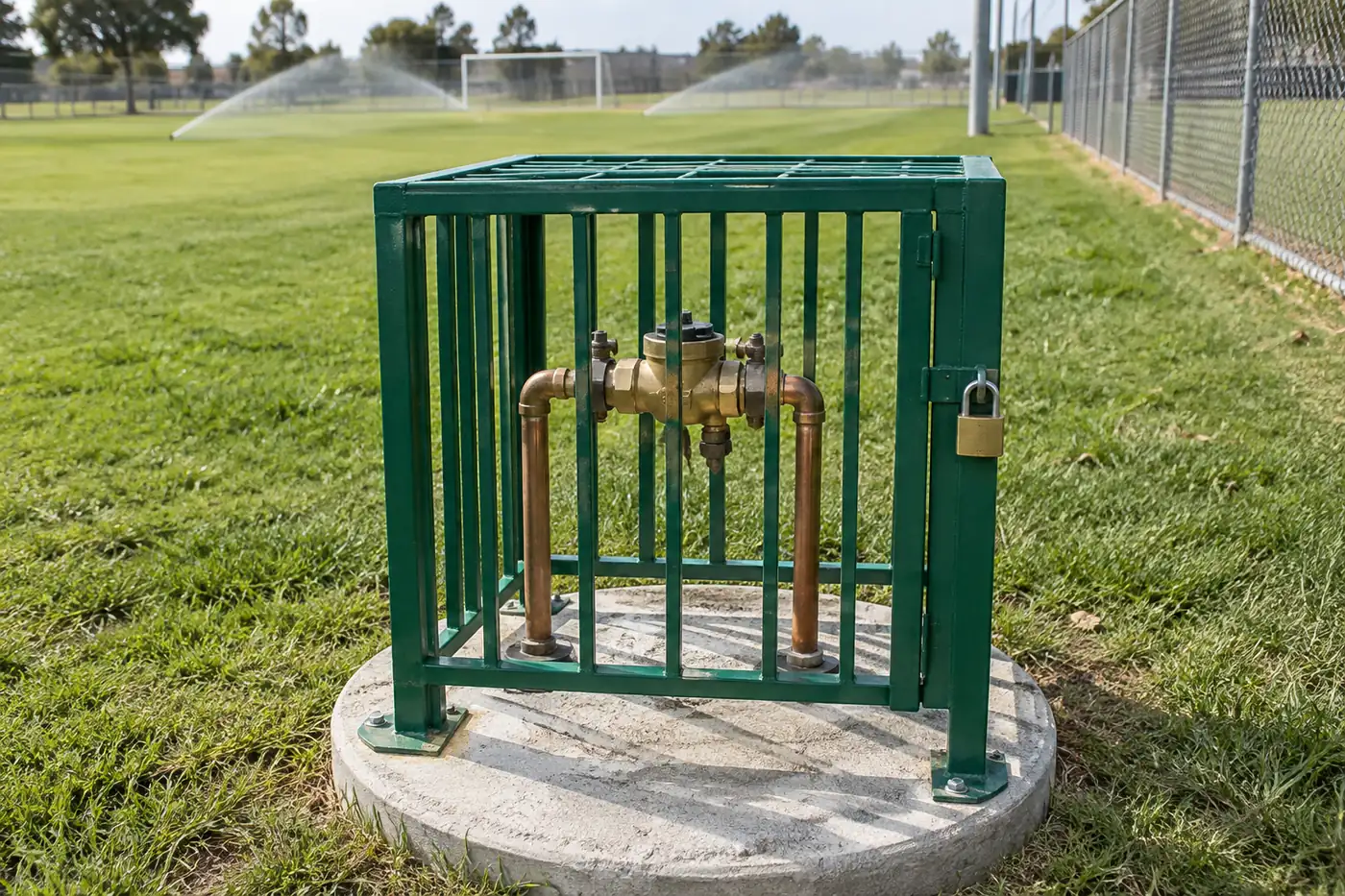
Irrigation backflow preventers sit at the edge of sports fields, medians and landscaped areas, often far from the building and out of sight. Compact lift-off or hinged bar cages bolted to a small concrete pad are the usual answer. Parks departments and HOAs frequently protect dozens of them across a site, so standard sizes and a single keyed-alike lock make maintenance easier. Facilities teams that store mowers, chemicals and irrigation parts can see how a country club maintenance cage handled the storage side.
Other common sites include:
- Retail centers and restaurants: domestic assemblies on landscape islands next to parking stalls, where theft and vehicle damage both happen
- Multifamily and property management: domestic and irrigation assemblies on every building in a complex
- Industrial and process water: plants, car washes and water treatment users with high-hazard connections that require reduced pressure assemblies
- Municipal and public facilities: city buildings, shops and lift stations — see our Town of Alta municipal security cage for an indoor example
- Utilities and co-ops: yard and equipment protection alongside the cages in our electric cooperative project
- Construction sites: new assemblies installed before a building is occupied, when sites are empty at night
How to size a backflow preventer cage
Backflow cages are usually sized from the assembly type and pipe size, but every installation is slightly different. Riser spacing, the height of the assembly above the pad, the shutoff valve handles, any strainer or pressure reducing valve, and the relief valve port on a reduced pressure assembly all change the space you need. Ordering from the pipe size alone is the most common reason a cage does not fit the first time.
Measure
- Assembly type: reduced pressure (RP), double check, pressure vacuum breaker or detector assembly
- Pipe size and overall length from riser to riser, outside to outside
- Height from the pad to the top of the highest valve handle or test cock
- Width at the widest point, usually the shutoff handles or the relief valve
- Pad size and condition, and any curb, wall or meter box close by
Allow for
- Clearance around test cocks so a tester can attach hoses without removing parts
- Room for shutoff valve handles to turn fully
- Clear space under an RP relief valve so discharge water drains away
- Space for an insulated cover inside the cage if you plan to add one in winter
- Extra pad or footing area if the cage is larger than the existing pad
Photos of every side of the assembly and a tape measure in the frame are usually enough for us to confirm a standard size or design a custom one. Large fire-line assemblies, detector assemblies with a bypass meter, and pads with two or more assemblies are almost always custom.
Tester access, locking and anchoring
Plan for the annual test
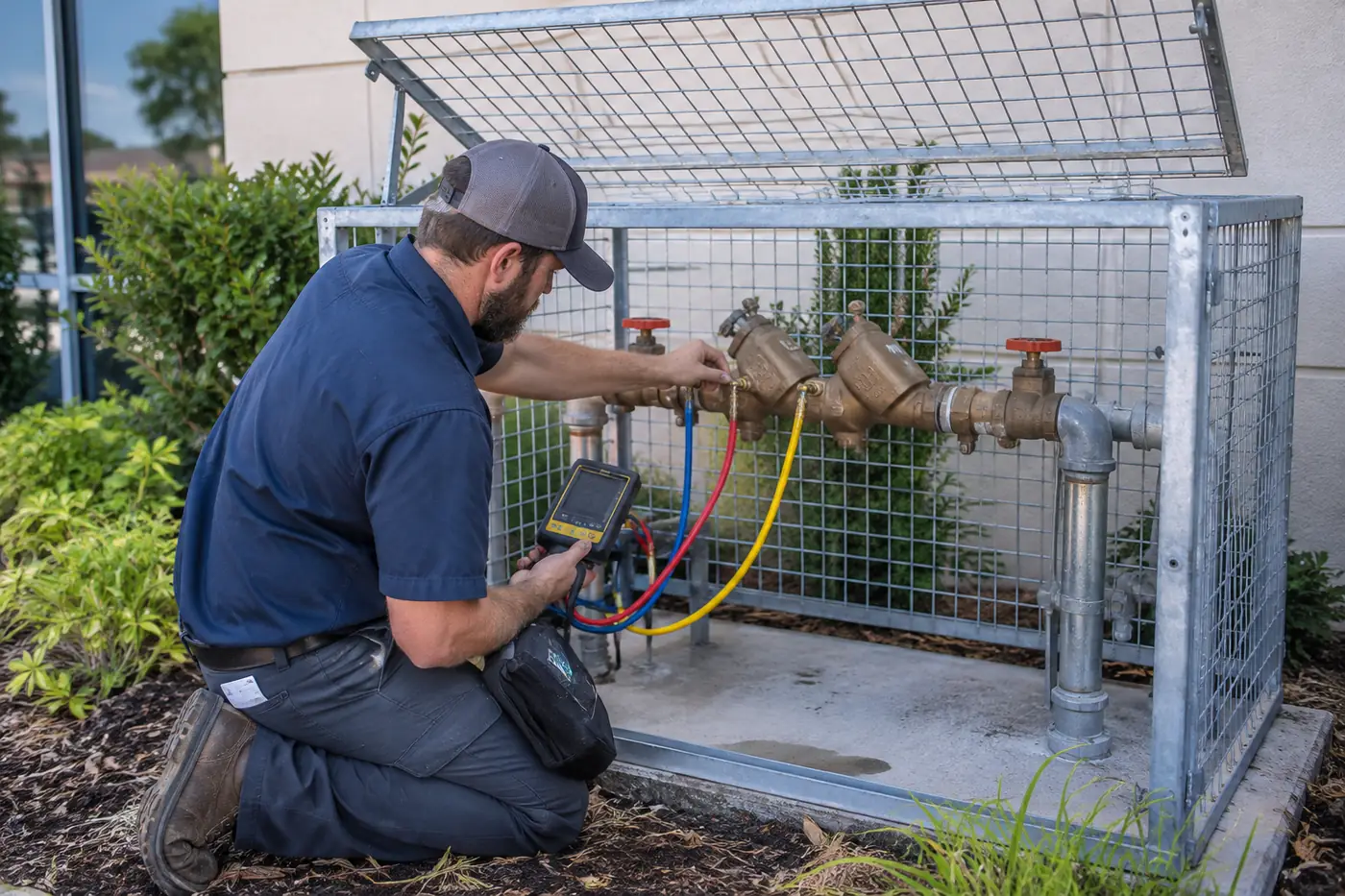
Most water systems require testable backflow assemblies to be tested at least once a year by a certified tester, and again after repairs. The test is done through the small test cocks on the assembly, using a differential pressure gauge and hoses. A cage that is hard to open will slow every test and tempts people to leave it unlocked, so choose a hinged lid, a lift-off cage light enough for two people, or a gate on walk-in cages.
Locks should be shielded so bolt cutters cannot reach the shackle, and keys or combinations shared with the tester and plumber. Compare options on our security cage locks and security cage doors pages.
Anchor the cage, not just the lid
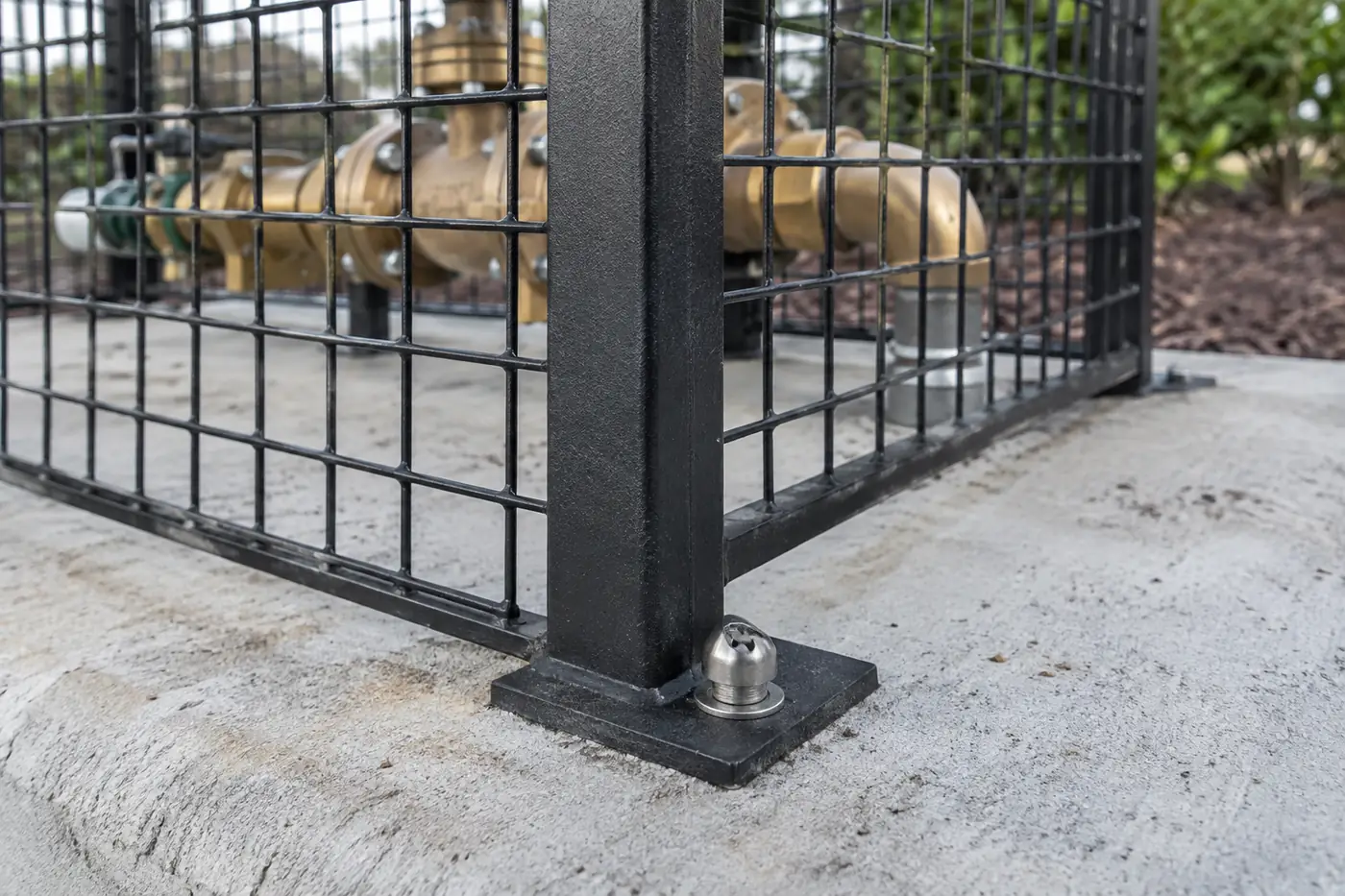
A cage that is only set on the pad can be tipped or lifted away. Backflow cages are fastened to the concrete pad through welded foot plates or a base angle, using wedge or expansion anchors with tamper-resistant heads, or with fasteners placed inside the cage where they cannot be reached once it is locked. When a new pad is poured, anchors or embedded bolts can be set in the concrete. Where the pad is too small or cracked, the cage can bear on its own footings.
Our security cage anchoring guide explains anchor types, and security cage installation covers how we install.
Add vehicle protection where cars park
A mesh cage stops theft, but it will not stop a car. Assemblies next to parking stalls or drive lanes are often hit, which damages the risers below the cage. Where the fire code requires vehicle impact protection, Section 312 of the International Fire Code sets out steel guard posts at least 4 inches in diameter and concrete filled, spaced no more than 4 feet apart, set at least 3 feet deep in a concrete footing and standing at least 3 feet above grade, placed at least 3 feet from the protected object, or another approved barrier. Your local fire code official decides when it applies.
Cages, covers and freeze protection
A cage is not a hot box
An open steel cage protects against theft and damage only. It does nothing for freezing, and a frozen assembly can crack its body or check valves. In cold climates, assemblies that must stay in service through winter go inside an insulated, usually heated, enclosure. Irrigation assemblies are often drained and winterized instead, and some owners add an insulated cover inside a steel cage for short cold snaps.
The performance standard for these enclosures is ASSE 1060, Outdoor Enclosures for Fluid Conveying Components. It describes enclosures that provide drainage, security and access for testing and repair, and classifies them by freeze protection: heated Class I enclosures with insulation of at least R-8, designed to hold 40°F inside at −30°F outside; non-heated Class II freeze-retardant enclosures for climates that do not stay below 33°F for long periods; and Class III enclosures that offer no freeze protection. Classes with a “V” suffix include air inlets or outlets for assemblies such as reduced pressure units.

If you need both security and freeze protection, ask whether the insulated enclosure itself is rated as vandal resistant and how it is anchored, or plan a steel cage large enough to sit around the enclosure. Either way, the enclosure must drain: a reduced pressure assembly can discharge a lot of water through its relief valve, and an enclosure that cannot drain it will flood.
Rules to check before you cage a backflow
The water purveyor. Backflow assemblies are part of a cross-connection control program run by the local water system. Many purveyors publish installation requirements, including the height of the assembly above grade, required clearances and how enclosures must drain. Ask them before ordering. The EPA Cross-Connection Control Manual explains why: a reduced pressure assembly keeps the zone between its two check valves at least two pounds below supply pressure and vents water when a check fails, and assemblies are furnished with test cocks and shutoff valves so they can be tested in place.
The fire department. Fire sprinkler backflow assemblies are part of the sprinkler system’s inspection, testing and maintenance program under NFPA 25, and their control valves must stay accessible. Confirm the lock type and gate location with the fire marshal, especially if the fire department connection is nearby.
The property and the site. Landlords, HOAs and city design rules may control color and appearance, which is why green, tan and black powder coats are common. Keep the cage clear of sidewalks, accessible routes and sight lines at driveways.
Photograph the assembly
Take photos of every side with a tape measure in view, and note the assembly type and pipe size.
Check the requirements
Ask the water purveyor, and the fire marshal for fire lines, about clearances, locks and drainage.
Choose the type
Lift-off or hinged for small and mid-size assemblies, walk-in for fire lines and multi-assembly pads.
Plan access
Agree on how the tester and plumber get in and how keys or combinations are shared.
Add protection
Decide on an insulated enclosure or cover for freezing, and guard posts near parking.
Fabricate and install
Cages are built to the assembly, finished for outdoor exposure and anchored on site.
Price depends mainly on size, mesh or bar construction, finish and whether the cage is a standard size or custom. Our security cage cost guide explains the main cost drivers, and larger or unusual assemblies are built as custom security cages. Galvanized steel or a powder coat over galvanizing holds up best where irrigation spray and de-icing salt are present. For cages fastened to a building wall, see wall-mounted security cages. For Intermountain sites, our Utah security cage team measures and installs locally from Salt Lake City; elsewhere we supply nationwide.
Shop Bollards to Protect Backflow Assemblies
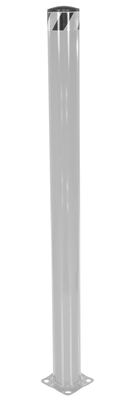
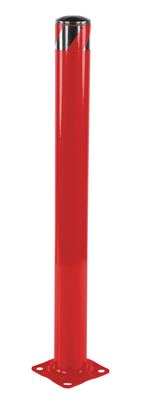
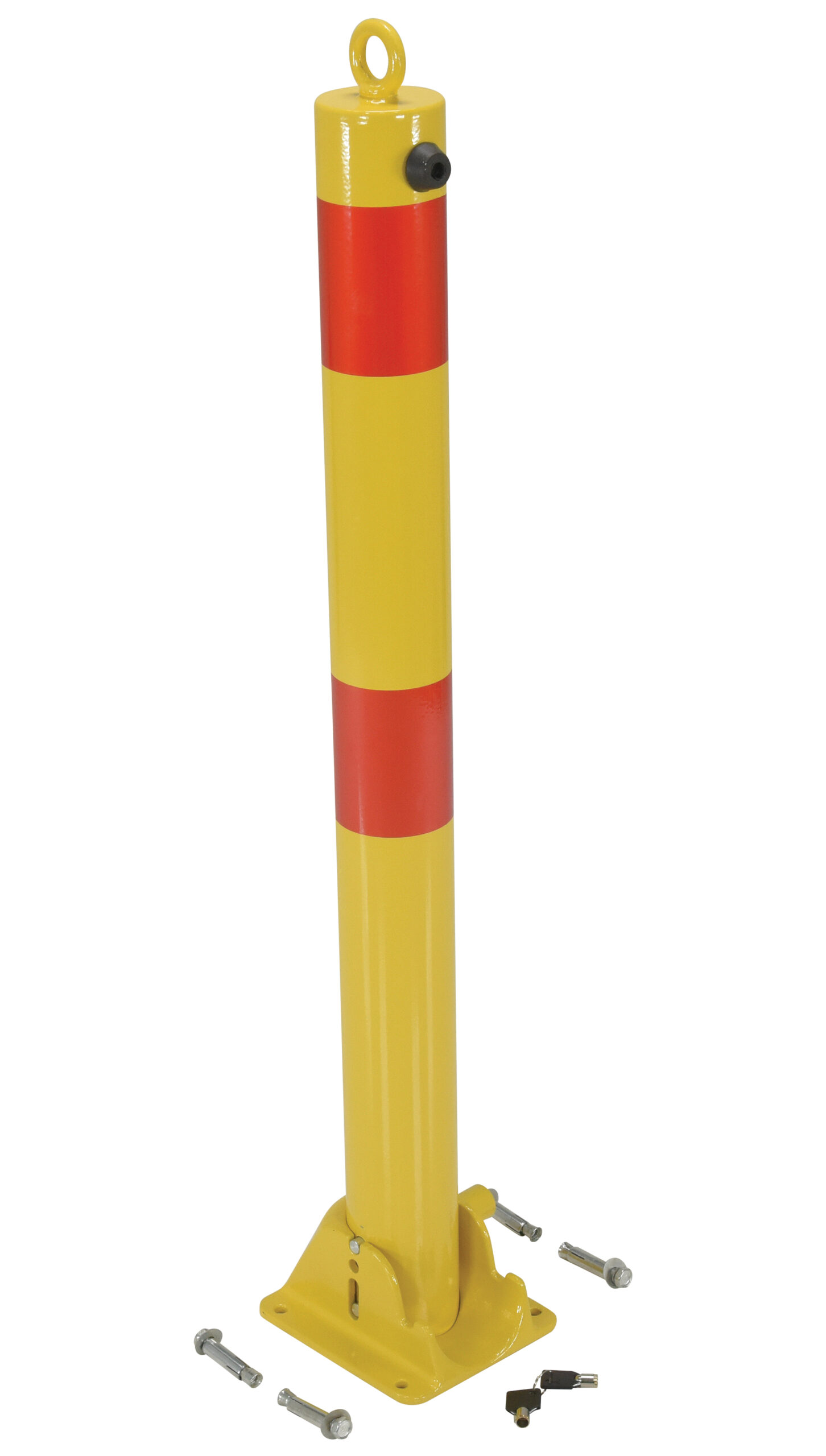
Backflow cages are sized to each assembly, so they are quoted rather than sold off the shelf. Where assemblies sit beside parking stalls or drive lanes, these steel bollards keep vehicles off the risers — fold-down styles let a tester’s truck get close when needed. Priced online.

Get a free quote
Tell us what you are storing, the room size and your timeline. A project specialist will follow up with layout options and pricing. Prefer to talk? Call (800) 326-4403.
Backflow Preventer Cage FAQs
What is a backflow preventer cage?
What size backflow cage do I need?
Can the backflow still be tested with a cage on it?
Does a backflow cage stop it from freezing?
What is the difference between a backflow cage and a backflow enclosure?
What is an RPZ backflow preventer, and does it need a special cage?
Where is a backflow preventer usually located?
How is a backflow cage anchored?
Do you supply backflow cages outside Utah?
Need cages for your backflow preventers?
Send photos of each assembly with a tape measure in view, plus the assembly type and pipe size. We will recommend the cage type and quote cages built to fit — supplied nationwide from Salt Lake City.