
Commercial Shelving
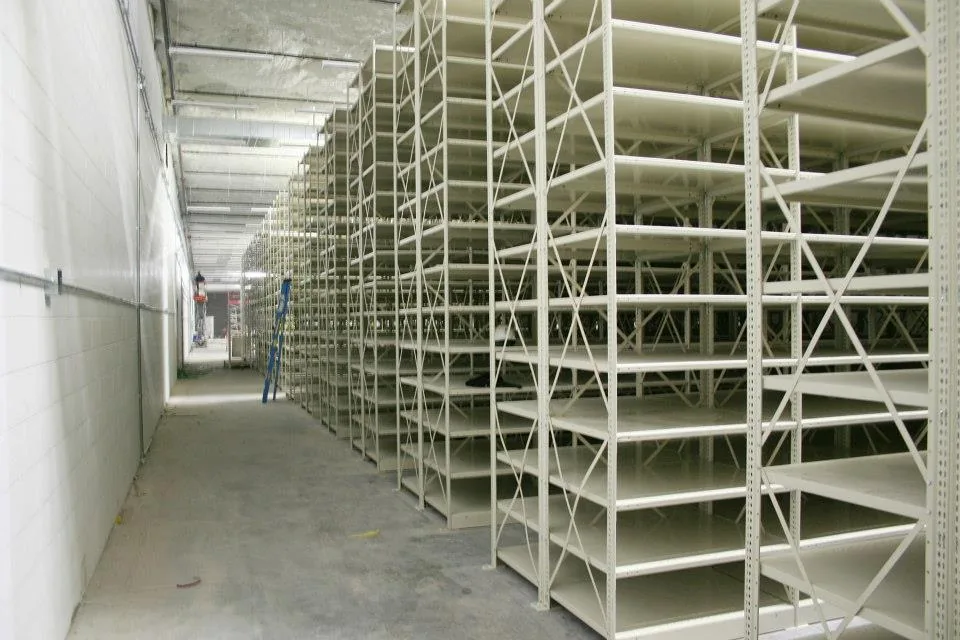
Commercial shelving for retail backrooms, offices, restaurants, healthcare supply rooms, schools and light warehouses. Steel clip, four-post, boltless and wire shelving units from Tennsco, Lyon, Penco, Metro and more, sized to your rooms, quoted with freight and installed by MH-USA.
4 types
Clip, boltless, wire, four-post
12-48 in
Common shelf depths
Every room
Backroom to kitchen
Nationwide
Design, freight, install
Shop Commercial Shelving Units Online
Order common commercial shelving units from our online store, or request a quote for a full room, other sizes, freight or installation.
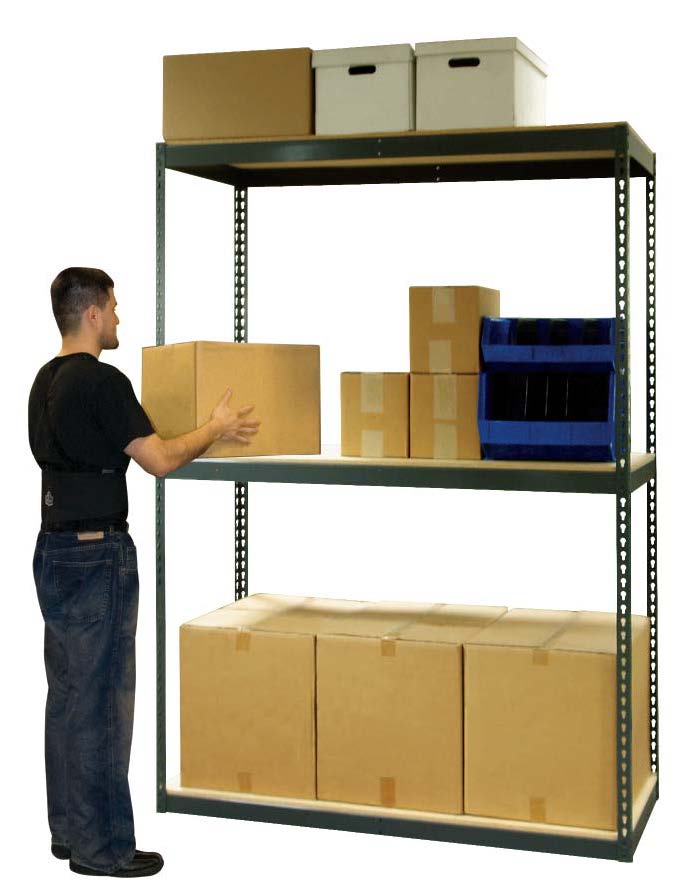
What Is Commercial Shelving?
Commercial shelving is the steel and wire shelving businesses use to store stock, supplies and records by hand. It is built to a higher standard than home or garage units, with heavier steel, rated shelf capacities, replacement parts you can still buy years later and units that join into long, straight runs. It sits between light consumer shelving and the heavy industrial shelving and pallet rack used in plants and distribution centers.
You will find it in retail backrooms, office supply rooms, restaurant dry storage, hospital supply rooms, school storerooms, records rooms and small warehouses. The four main families are steel clip shelving, four-post steel shelving, boltless (rivet) shelving and wire shelving. To compare every system we design and install, start at our shelving solutions overview.
Photo: Penco Products
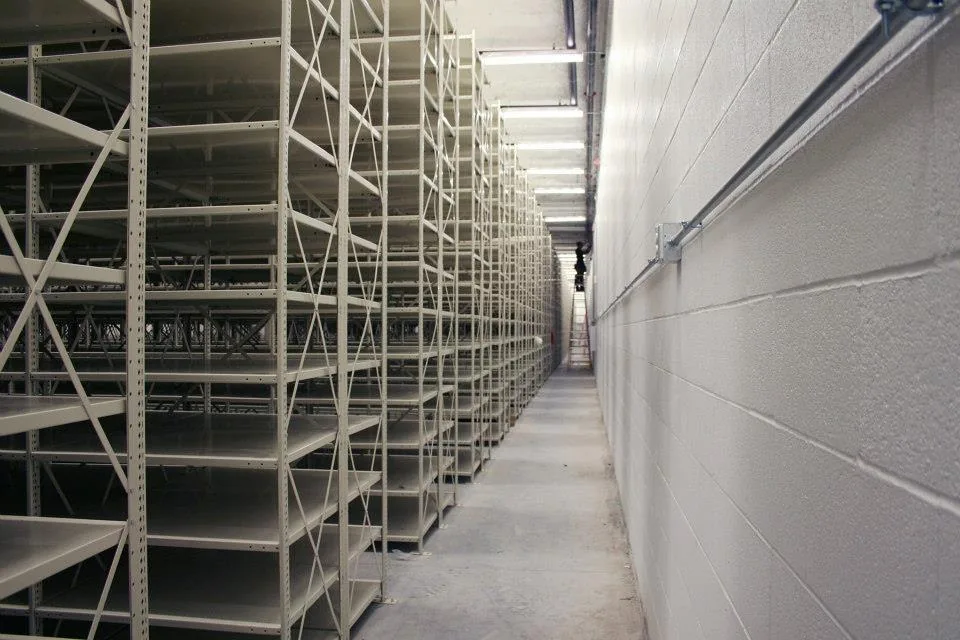
Commercial shelving is the right fit when
- Items are picked and restocked by hand, not by forklift.
- You store many different items in small quantities: cartons, cases, files, bins, parts or supplies.
- The room is used by staff every day, so the shelving needs to look neat and stay level.
- You want to add units later and get matching parts, not mix brands that do not fit together.
- The room has rules to meet: food safety, sprinkler clearance, seismic anchoring or security.
Types of Commercial Shelving
Each family has a different strength. Many businesses use two or three of them in one building, for example clip shelving in the stockroom, wire shelving in the kitchen and boltless units in the receiving area.
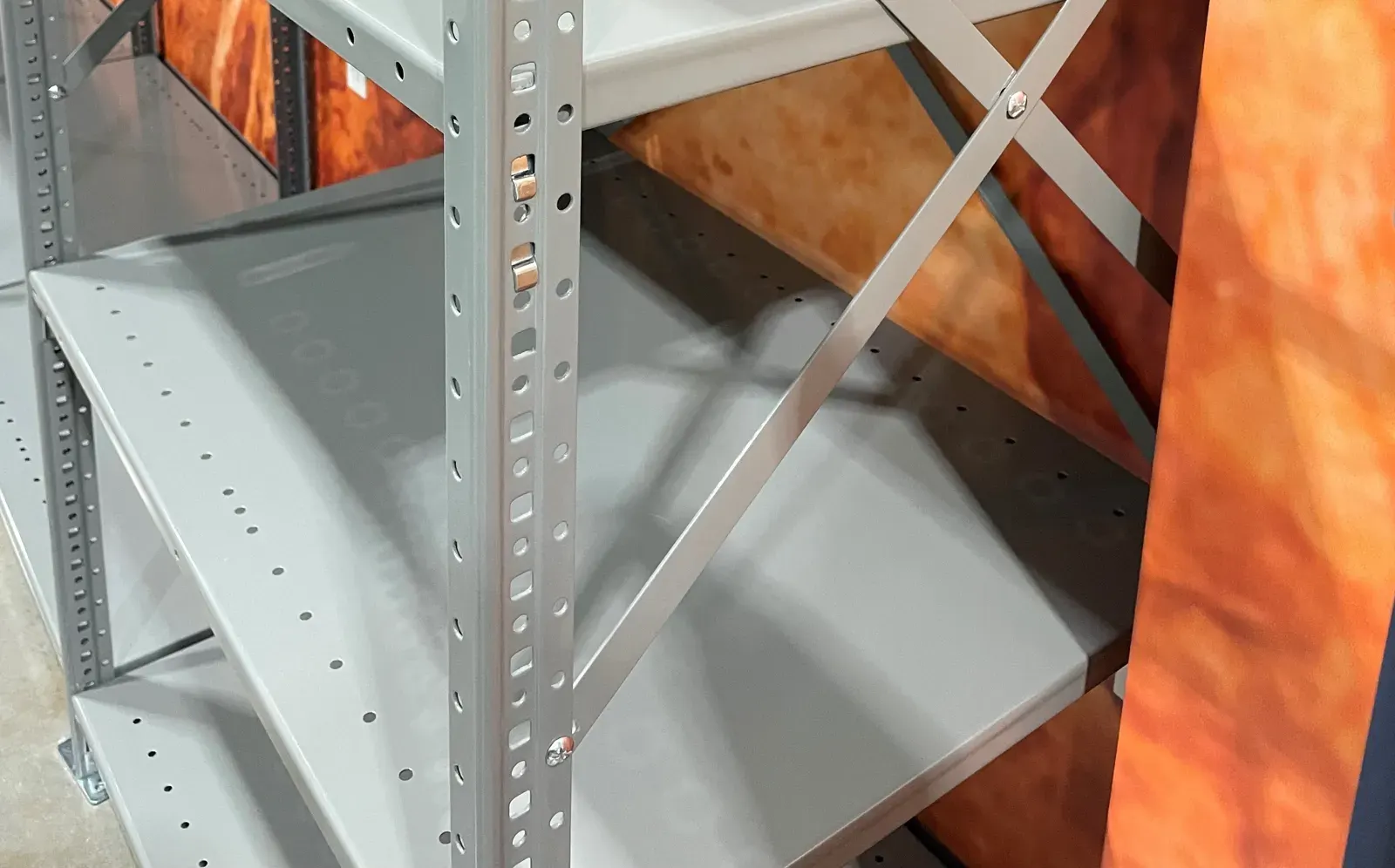 Steel clip shelvingSlotted angle or T posts, shelves held by clips, sway or panel bracing. The classic stockroom and records unit.
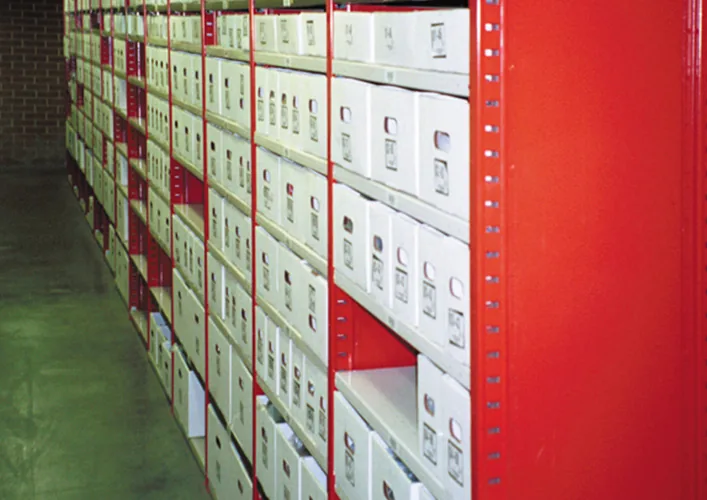 Closed four-post steel shelvingBack and side panels keep small items and files from falling through. Good for records and parts.
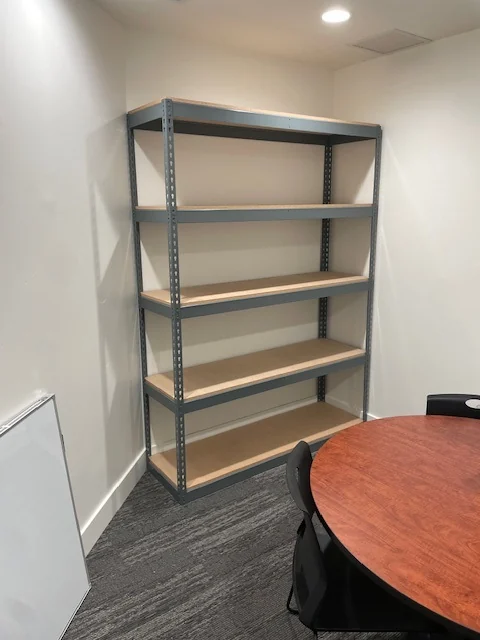 Boltless (rivet) shelvingRivets lock beams into posts with no clips or bolts. Wide bays, board or wire decks, fast to assemble.
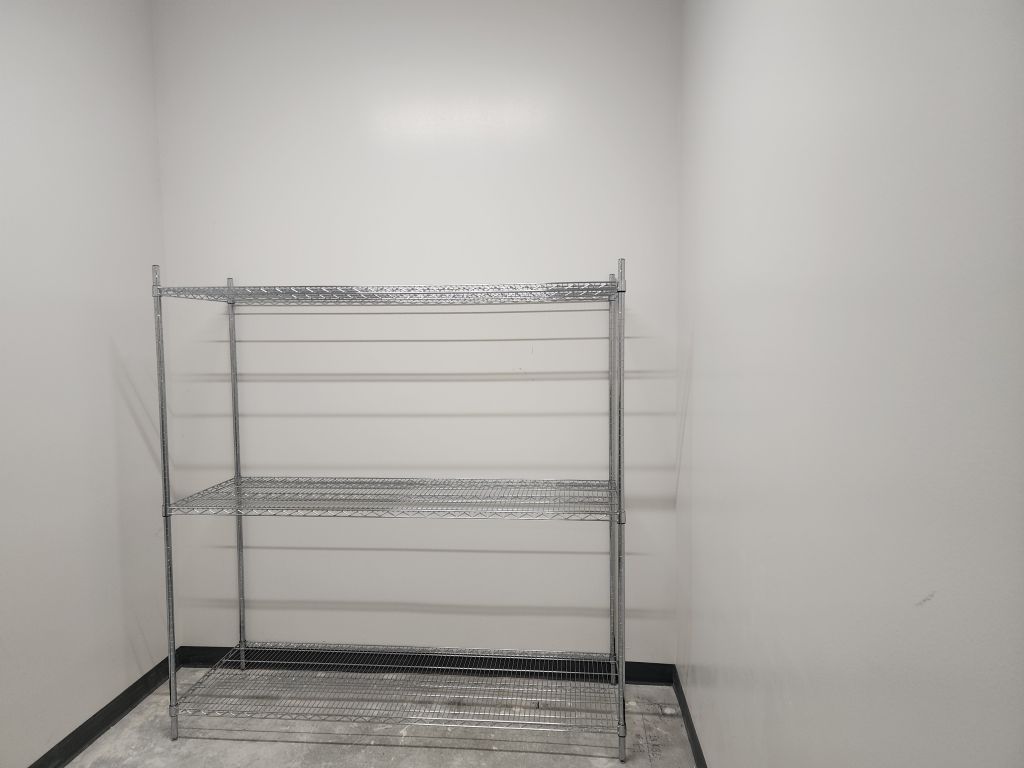 Wire shelvingOpen wire shelves in chrome, epoxy or stainless. Light, airy and easy to clean for supply rooms and kitchens.
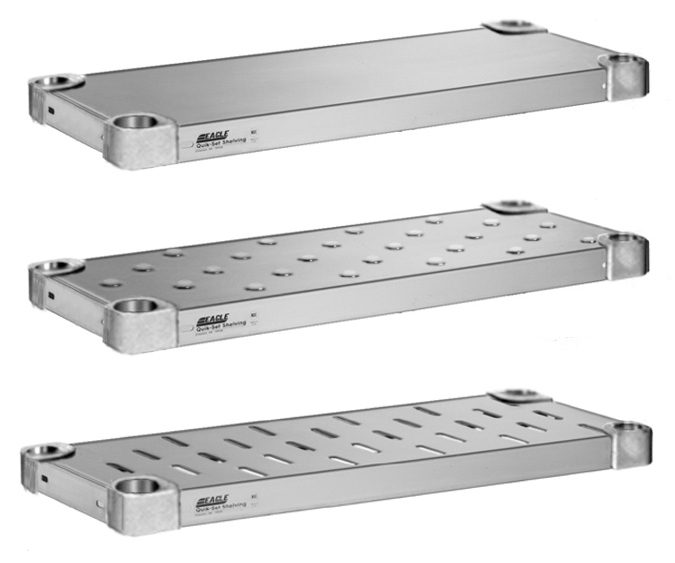 Solid stainless and NSF shelvingSmooth solid shelves for food, medical and washdown areas where sanitation rules apply.
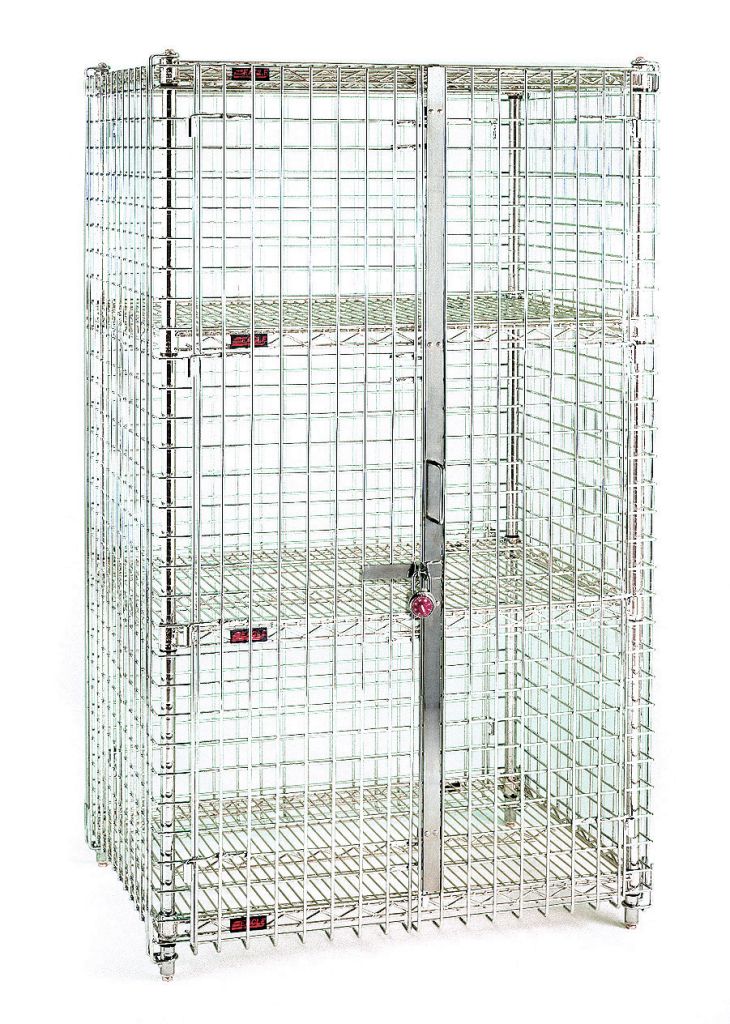 Security shelvingWire units with lockable doors for liquor, pharmaceuticals, electronics and other high-value stock.
Steel clip shelving
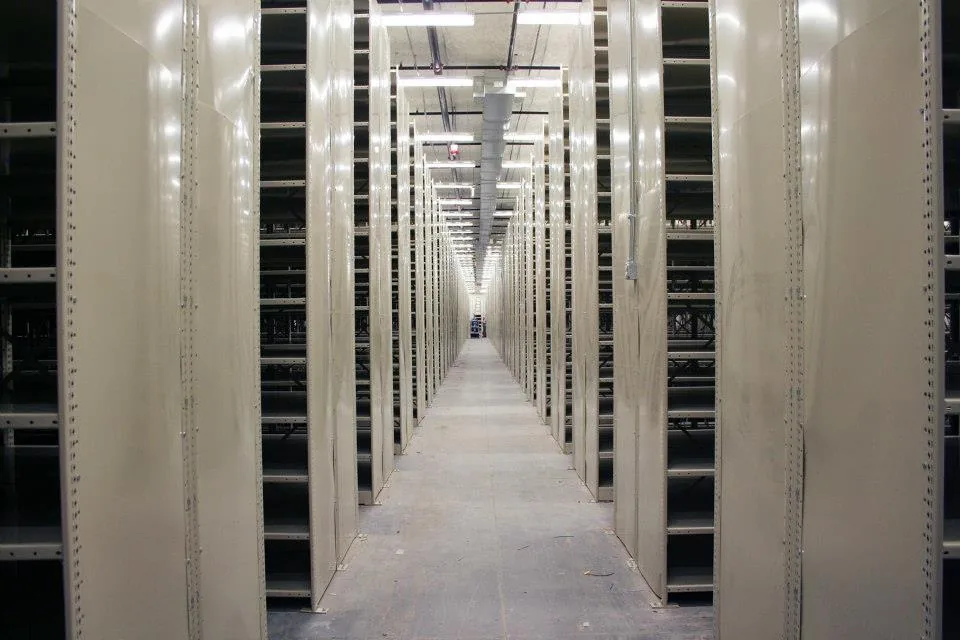
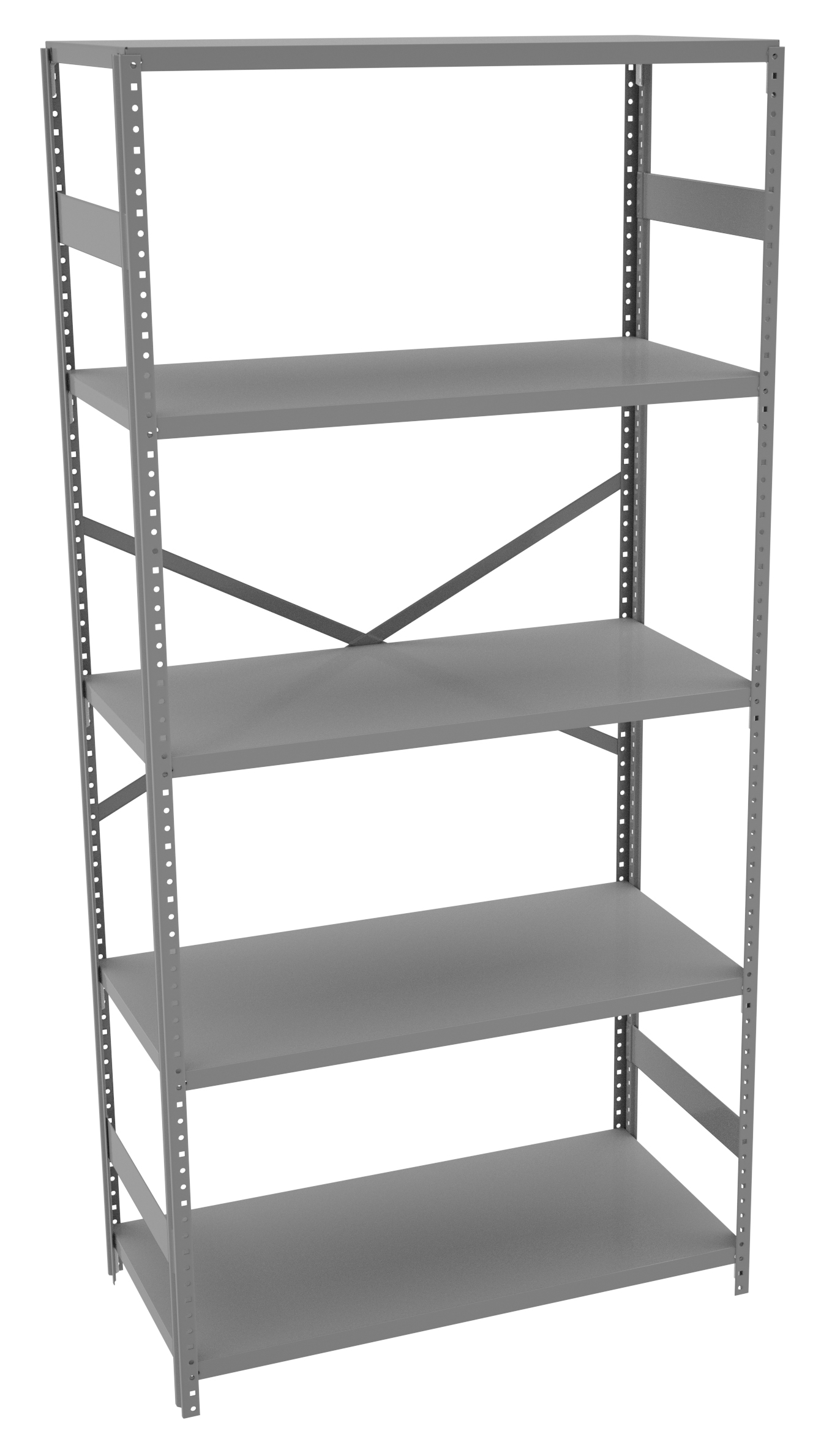
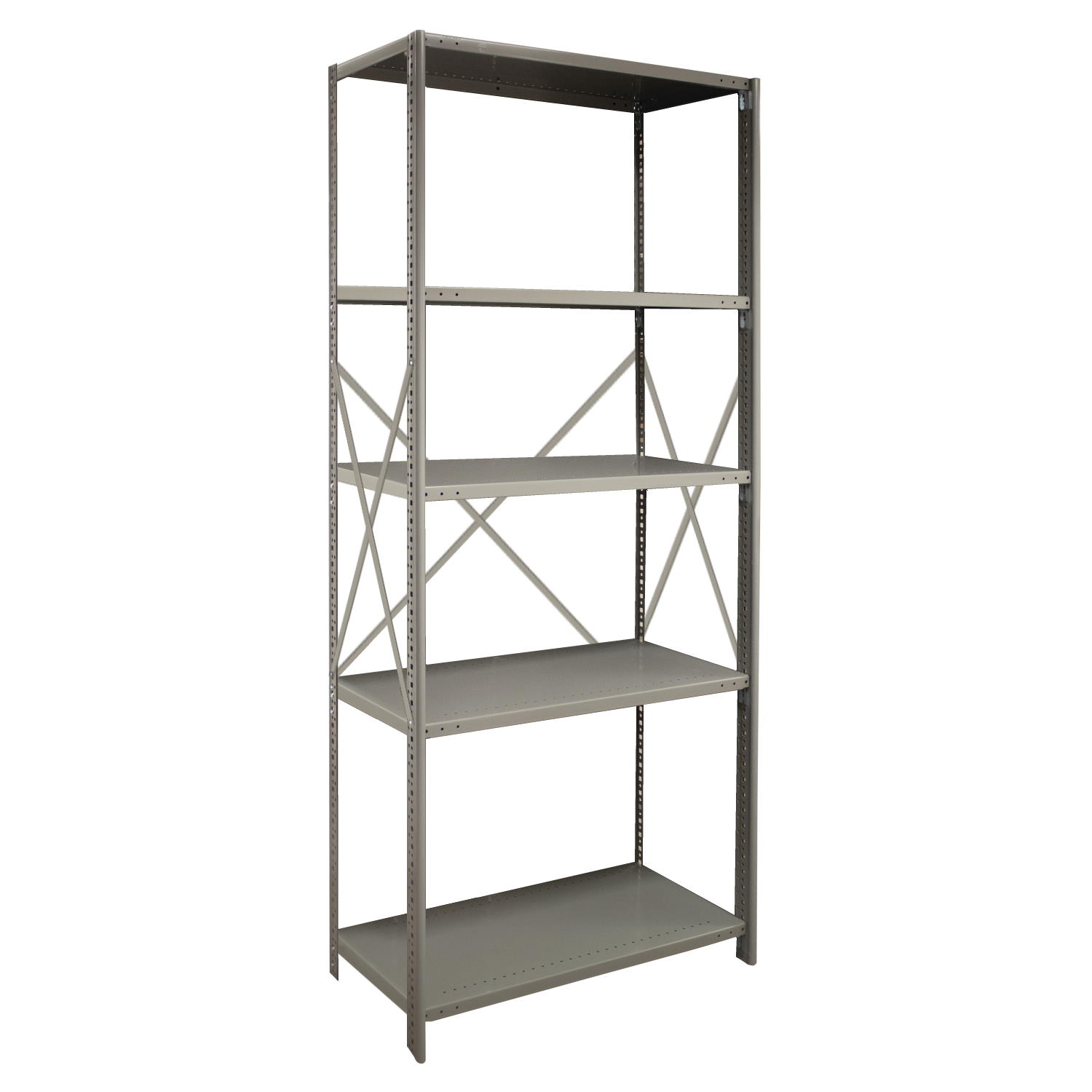
Clip shelving uses steel posts punched with slots on close centers. Shelves rest on clips that snap into those slots, so you can move a shelf without tools. Units come open style, braced with steel sway braces so you can see and reach through the sides, or closed style, with solid back and side panels that keep small parts and files contained.
The Tennsco commercial clip units in our store use multiple-bend shelf flanges with lapped and welded corners, rated up to 250 lb per shelf with the weight evenly distributed, and compression clips for adding and adjusting shelves. Heavier clip lines such as Penco Clipper and Tennsco industrial units are quoted for larger rooms. Lost clips? See shelf clips and dividers.
Photo: Penco Products
Four-post steel shelving
Four-post shelving is the heavier cousin of clip shelving. Lyon’s 2000 Series, sold in our store, uses roll-formed 14-gauge steel posts, 12-gauge back and side braces and box-formed shelves with lapped and welded corners rated at 800 lb per shelf, adjustable on 1-1/2" centers. Choose angle posts for the lowest cost or beaded posts for a cleaner look and better access. Closed versions add back and side panels. See steel shelving and Lyon shelving for the full range.
Boltless and wire shelving
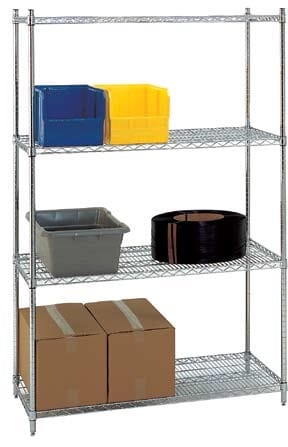
Boltless shelving has no clips, bolts or cross braces. Beams with rivets drop into keyhole slots in the posts, which makes it quick to build and easy to reach from every side. It is the usual choice for wide bays of cartons, bulky supplies and receiving areas. Wire shelving is the lightest-looking option: open wire shelves on round posts. Metro Super Erecta, for example, adjusts in 1" steps on numbered posts, and the open wire design keeps dust from collecting while air and light reach every level.
Commercial Shelving Compared
Use this table as a starting point. Ratings depend on the manufacturer, shelf size, gauge and how evenly the load sits, so we always confirm capacity for the exact unit.
| Steel clip | Four-post steel | Boltless (rivet) | Wire | |
|---|---|---|---|---|
| Best for | Stockrooms, records, small parts | Heavier parts, files, closed storage | Cartons, bulky items, wide bays | Kitchens, coolers, supply rooms |
| Common widths | 36"-48" | 36"-48" | 36"-96" | 24"-72" |
| Common depths | 12"-24" | 12"-24" | 12"-48" | 14"-24" |
| Open or closed | Both | Both | Open | Open |
| Adjustment | Clips in slotted posts | Clips, on close centers | Beams in keyhole slots | Split sleeves on grooved posts |
| Assembly | Clips and bolts for bracing | Clips and bolts | Rubber mallet, no bolts | No tools |
| Learn more | Clip shelving | Steel shelving | Boltless shelving | Wire shelving |
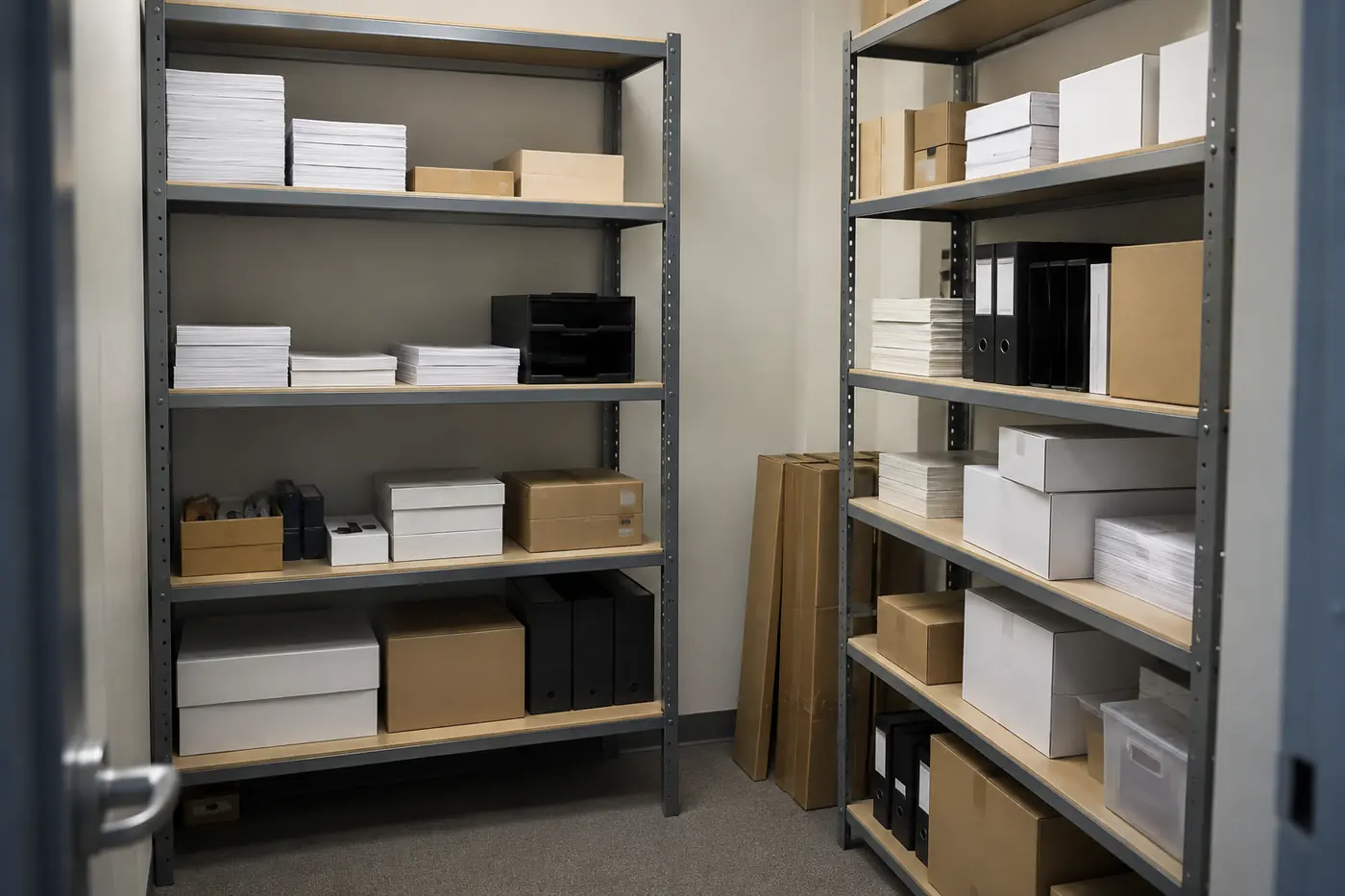
Commercial, industrial or metal shelving? The words overlap. On our site, industrial shelving covers the heavier systems for plants, maintenance shops and distribution centers, metal shelving covers every steel and wire shelving type in one place, and this page focuses on the shelving everyday businesses buy for back-of-house rooms.
If the load arrives on a pallet, you need pallet rack. If you pick many bulky cartons by hand from long bays, compare wide span shelving. If floor space is the problem, mobile shelving fits more storage into the same room by removing fixed aisles.
Finishes, Capacities and Sizes
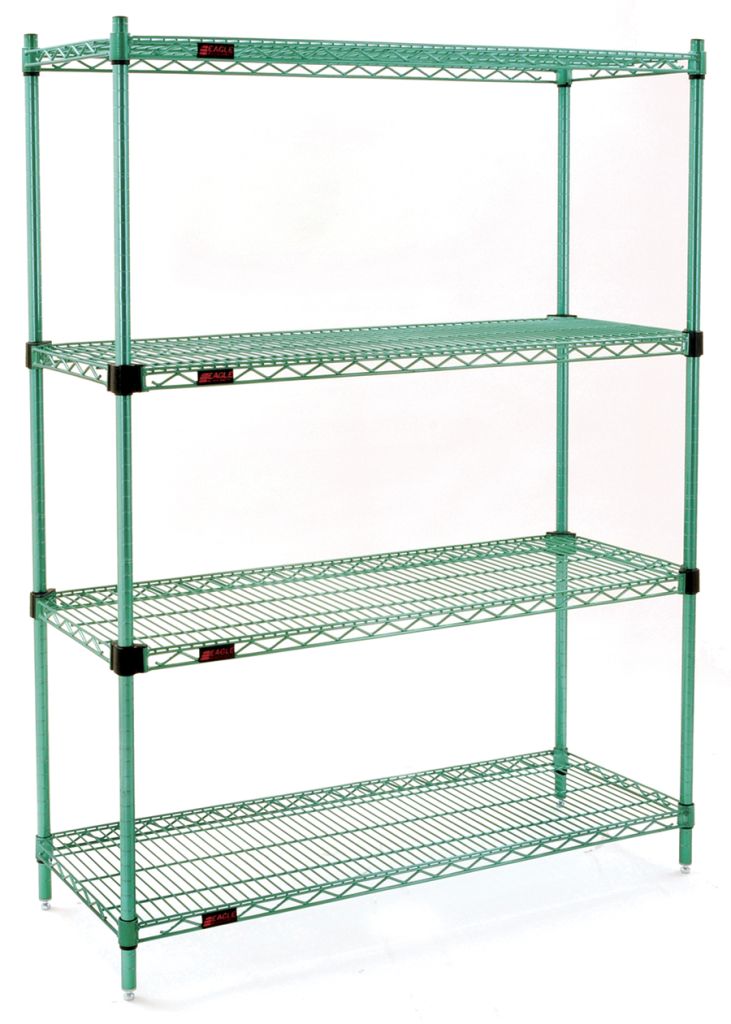
Finish follows the room. Powder-coated or painted steel in gray, sand or putty suits dry stockrooms, offices and records rooms. Chrome wire looks bright and clean in dry storage. Epoxy-coated wire, often green or gray, stands up better to moisture in coolers and damp rooms. Stainless steel wire or solid stainless is the choice for washdown, freezer and corrosive areas. Grades, gauges and NSF-listed units are compared on our stainless steel shelving page.
Wire finishes are compared in detail on our Metro wire shelving finishes guide. Board decks for boltless units are covered on our particle board shelving decks page.
Photo: Eagle Group
| Finish | Best rooms | Watch for |
|---|---|---|
| Painted or powder-coated steel | Stockrooms, offices, records, retail backrooms | Not for wet or washdown areas |
| Chrome wire | Dry storage, supply rooms, displays | Rusts in constant moisture |
| Epoxy-coated wire | Walk-in coolers, damp storerooms | Chips if loaded roughly |
| Stainless steel | Freezers, washdown, corrosive areas | Higher cost; buy only where needed |
| Galvanized steel | Unheated storage, garages, humid rooms | Plain industrial look |
How capacity really works
- Per-shelf ratings assume an evenly spread load. A heavy motor in the middle of a shelf is not the same as cartons spread across it.
- Wider shelves usually carry less. The same shelf style rated for one load at 36" may be rated lower at 48" or 72".
- The unit has its own limit. Posts carry the total of every shelf, so add the shelves up.
- Heavy stock goes low. Keep the heaviest and most-used items between knee and shoulder height.
- Post the ratings. A label on each run tells staff what a shelf can safely hold.
Common commercial shelving sizes
| Dimension | Common choices | How to pick |
|---|---|---|
| Width | 36", 48", 60", 72" | 36" for heavy items and records; wider for cartons |
| Depth | 12", 18", 24" | 12" for files and binders, 18" for most stock, 24" for cases |
| Height | 72", 84", 85"-87" | Reach height for staff; taller needs a step ladder and anchoring |
| Shelves | 4-7 per unit | Tallest item per opening plus lift-off room |
Commercial Shelving Applications: How to Choose by Room
The best commercial shelving depends on what is stored, how often it moves and the rules the room has to meet. These are the rooms we plan most often and what we usually specify for each.
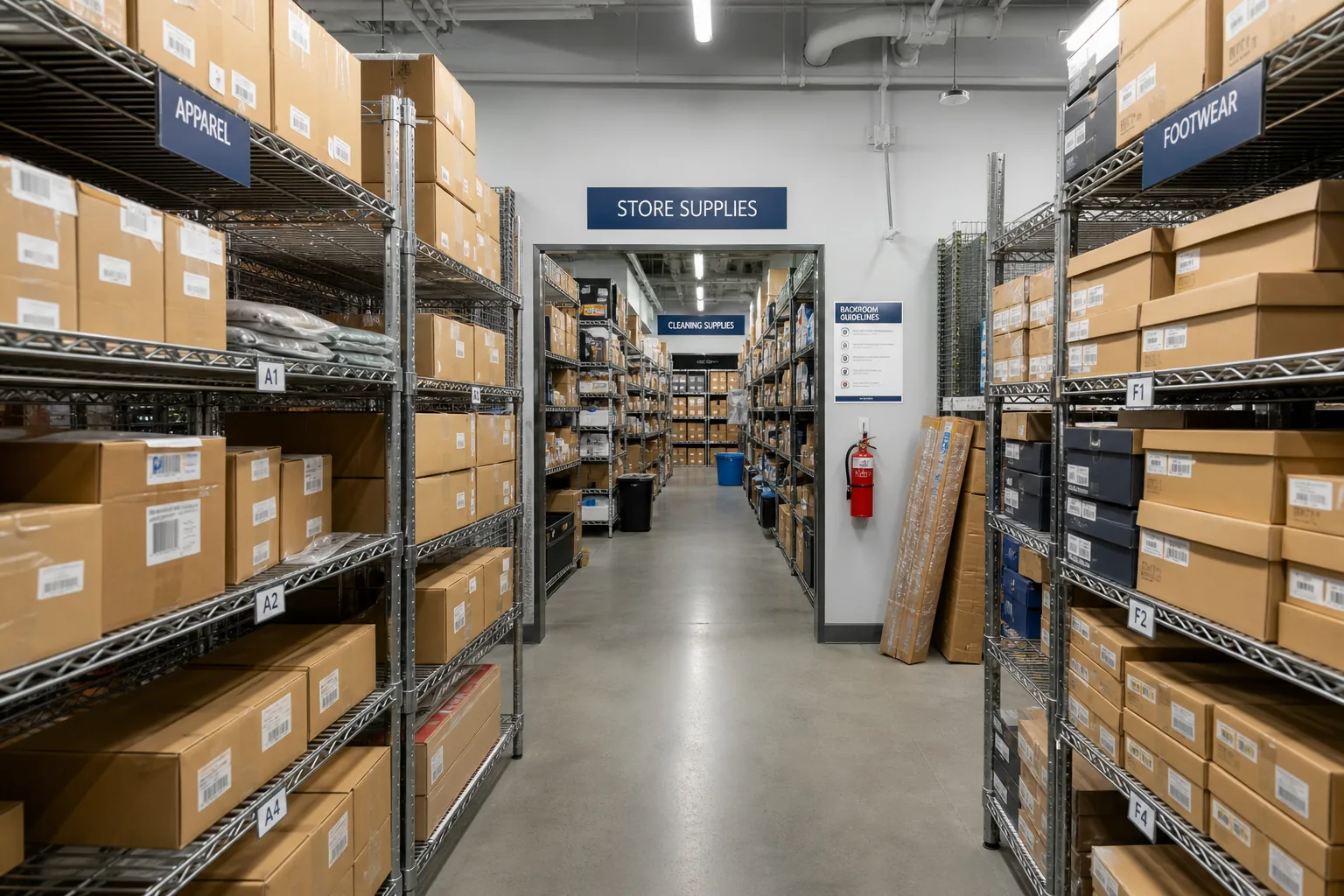 Retail backroomsClip or boltless shelving in zoned runs with labels, plus a caged area for high-theft stock.
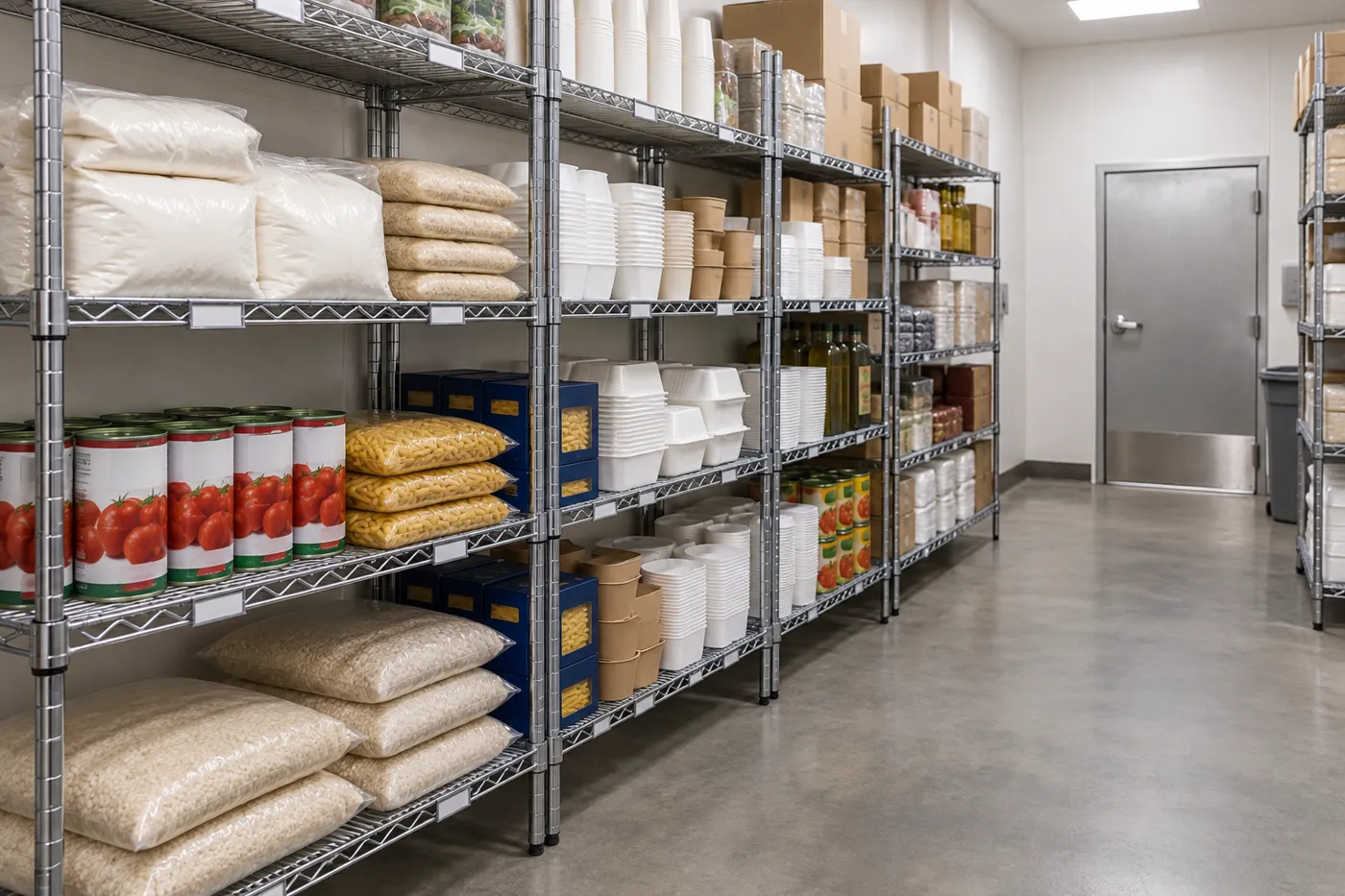 Restaurant dry storageChrome or epoxy wire shelving on adjustable posts, with the bottom shelf off the floor.
 Healthcare supply roomsWire shelving with bins and labels for par levels, easy to wipe down.
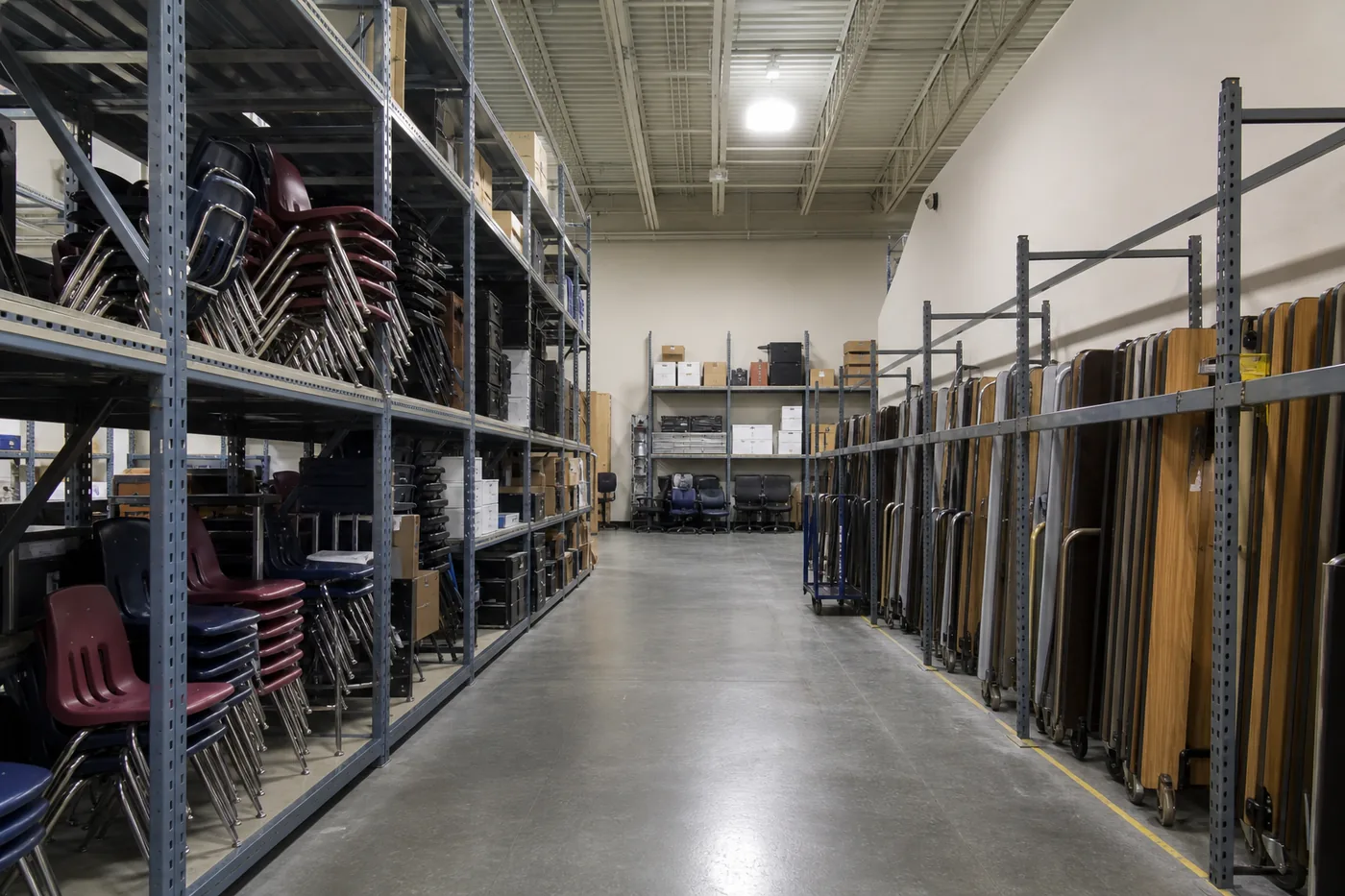 Schools and districtsBoltless and clip shelving for supplies, furniture and equipment, anchored for safety.
 Records, museums and archivesClosed steel shelving for boxes and objects, often moved to mobile shelving later.
 Parts rooms and small warehousesSteel shelving with bins, drawers and dividers for many small SKUs.
Room-by-room quick guide
| Room | Usual shelving | Key details |
|---|---|---|
| Retail backroom / stockroom | Clip, four-post or boltless | Zones, labels, 18"-24" deep, aisle for carts |
| Office supply room | Clip or light boltless | 12"-18" deep for paper and binders; closed sides for files |
| Restaurant dry storage | Chrome or epoxy wire | Food off the floor, open wire for airflow, NSF where required |
| Walk-in cooler or freezer | Epoxy, polymer or stainless wire | Corrosion resistance, open shelves for cold air |
| Healthcare supply room | Wire with bins | Cleanable surfaces, par-level labels, clearance below sprinklers |
| School storeroom | Boltless and clip | Anchoring, sturdy decks for paper cases and equipment |
| Records room | Closed steel or mobile | 12"-15" deep for files, boxes sized to shelf |
| Light warehouse | Boltless, wide span | Wide bays, wire decks, room to add units later |
Planning one of these rooms in detail? See our guides to stock room shelving, retail stockroom shelving, office shelving and hospital stock room design.
Commercial Kitchen and Restaurant Shelving
Kitchens and restaurants are one of the biggest users of commercial shelving, and the rules are stricter than in a stockroom. Health inspectors look for food stored off the floor, surfaces that can be cleaned and shelving that will not rust onto food containers. That is why most kitchens use wire shelving in chrome for dry storage and epoxy, polymer or stainless in coolers and freezers.
Many foodservice shelving lines are NSF certified, which means the design has been tested for cleanability and materials for food zones. Check the listing for the exact finish you buy, and see our NSF certified shelving page for what that covers. For walk-ins, see our walk-in cooler shelving guide.
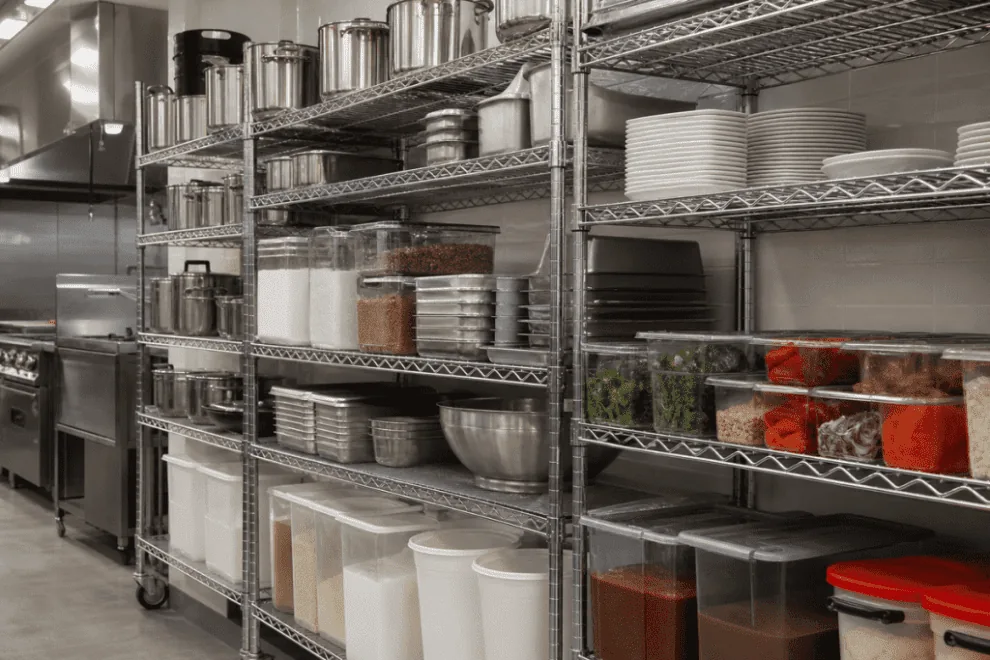
Kitchen shelving checklist
- Bottom shelf high enough off the floor for your local health code and for mopping underneath.
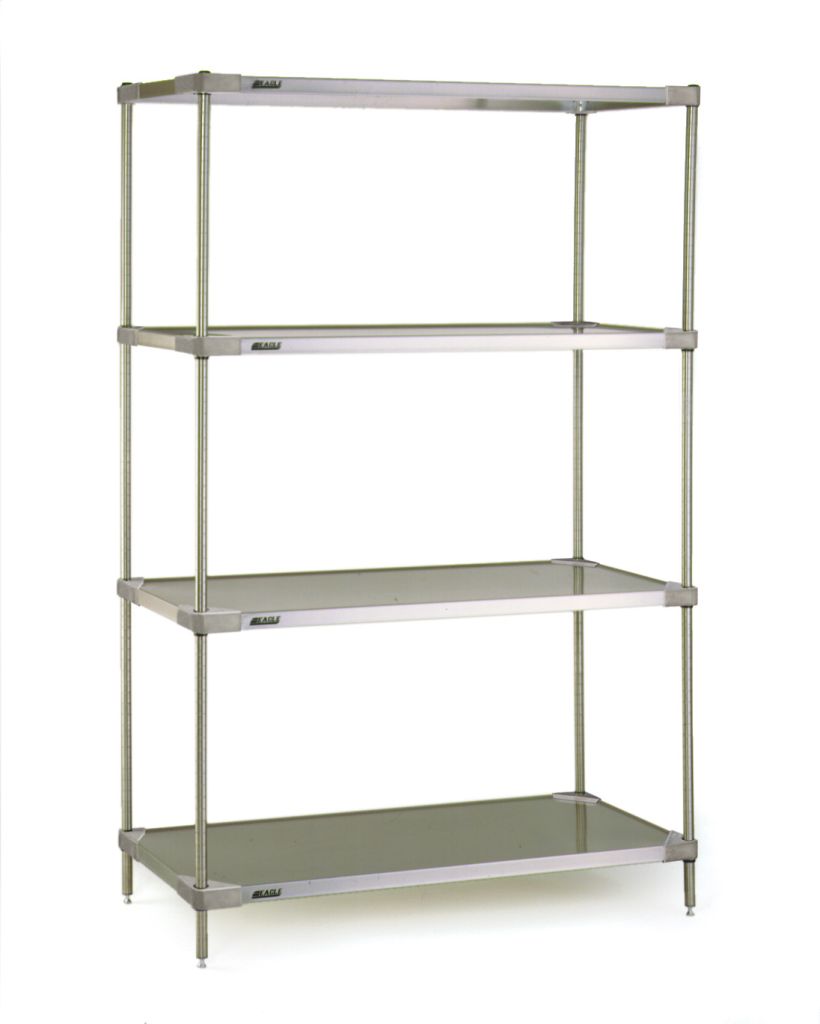
- Open wire where cold air or airflow matters; solid shelves where spills must not drip down.
- Stainless or epoxy for anything near sinks, dish machines or in walk-ins.
- Mobile units on casters for areas that must be cleaned under daily.
- Lockable security units for liquor and high-cost items; see Metro security shelving.
Photo: Eagle Group
Commercial Shelving Buying Guide
List what you store
Largest, heaviest and most common items, and how many of each.
Measure the room
Walls, doors, columns, ceiling and sprinkler heights, plus a few photos.
Pick type and finish
Match the shelving family and finish to the load and the room.
Quote and install
Units, freight and optional installation on one quote, then delivery and setup.
Mistakes we see most often
- Buying by price alone. A light unit that sags or wobbles will be replaced sooner, and mixed brands rarely share parts.
- Shelves deeper than the stock. Items get pushed to the back and lost. Match depth to the box, not the room.
- No plan for growth. Starter and add-on units share posts, so leave space to extend a run instead of starting a new brand later.
- Ignoring the aisle. Plan aisle width for what uses it: people only, carts or pallet jacks.
- Forgetting anchoring and sprinklers. These are easy to plan up front and costly to fix after an inspection.
Starter and add-on units
Most commercial shelving is sold as a starter unit with its own posts at both ends and add-on units that share a post with the unit next to them. A run of five units is one starter plus four add-ons, which costs less and looks neater than five separate units. Back-to-back rows are tied together, and wall runs are tied to the wall where the code or height calls for it.
New or used commercial shelving?
Used shelving can look like a bargain, but the savings are usually used up by installation. Parts rarely fit well after they have been taken apart, and the installer’s time to straighten and fit them often costs more than new. Reusing shelving you already own can work, but new is sometimes still cheaper once fix-up time is counted. A quick call to our sales team with a few pictures is the fastest way to decide. Missing a few parts? See shelving replacement parts.
Installation, Anchoring and Codes
Anchoring and seismic areas. Tall shelving can tip when it is loaded unevenly, climbed or shaken. In seismic regions, and in many public buildings such as schools and hospitals, building officials can require shelving above a certain height to be anchored to the floor, tied to the wall or tied together overhead. Manufacturers sell base plates and seismic kits for this. Your building official sets the exact requirement; we include the hardware in the quote. See parts room shelving anchoring for an example.
Sprinklers and fire code. Keep the top of stored items below the sprinkler heads, commonly at least 18" under standard heads. Open wire decks let sprinkler water reach lower shelves, which is why some fire marshals prefer them in storage rooms.
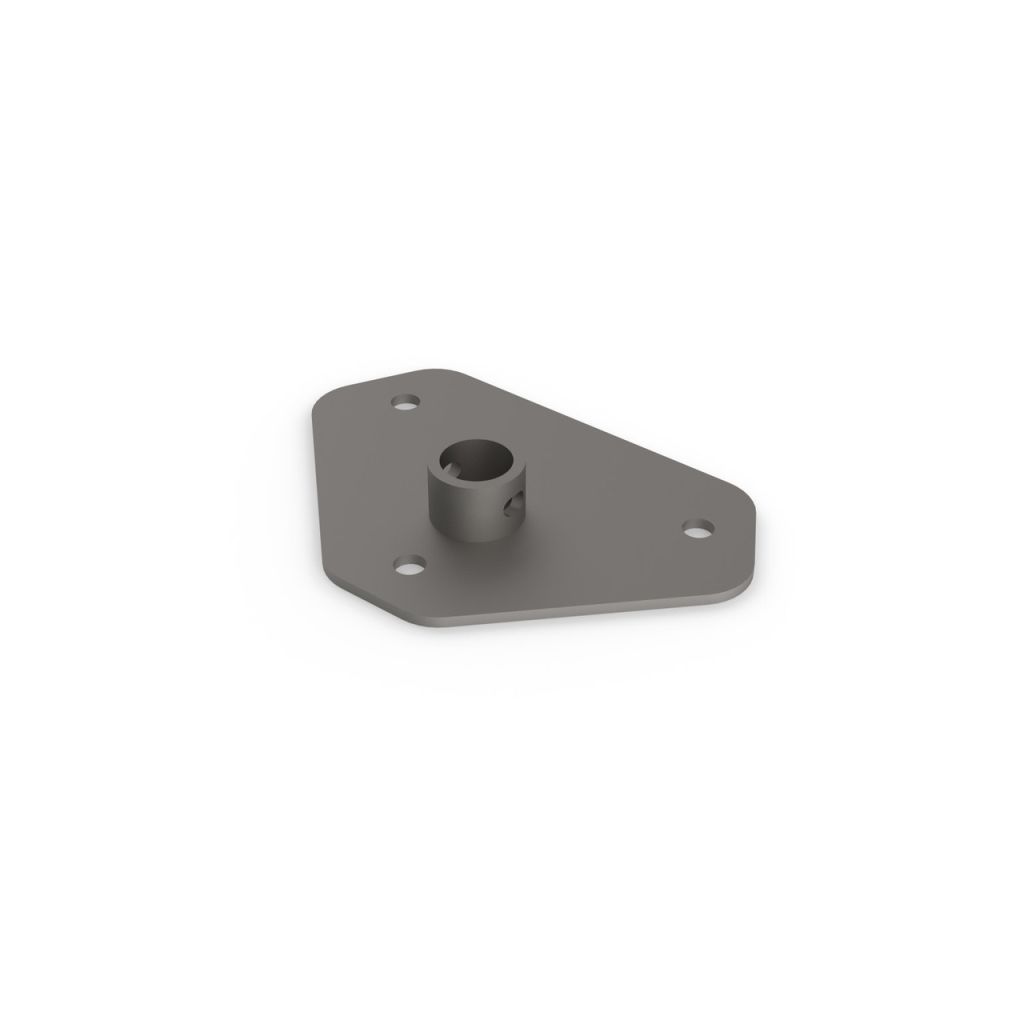
What our installation includes
- Receiving and staging the delivery, then removing the packaging.
- Assembling units level and plumb, with starter and add-on units joined in straight runs.
- Floor anchors, wall ties and row ties where they are required or requested.
- Setting shelf heights to your stock and adding labels, dividers or bins.
- A final walk-through so staff know the shelf ratings and how to adjust levels.
We design, supply and install commercial shelving nationwide. For what a typical job covers, see shelving installation.
Commercial Shelving Case Studies
Real MH-USA projects that show the same choices covered on this page.
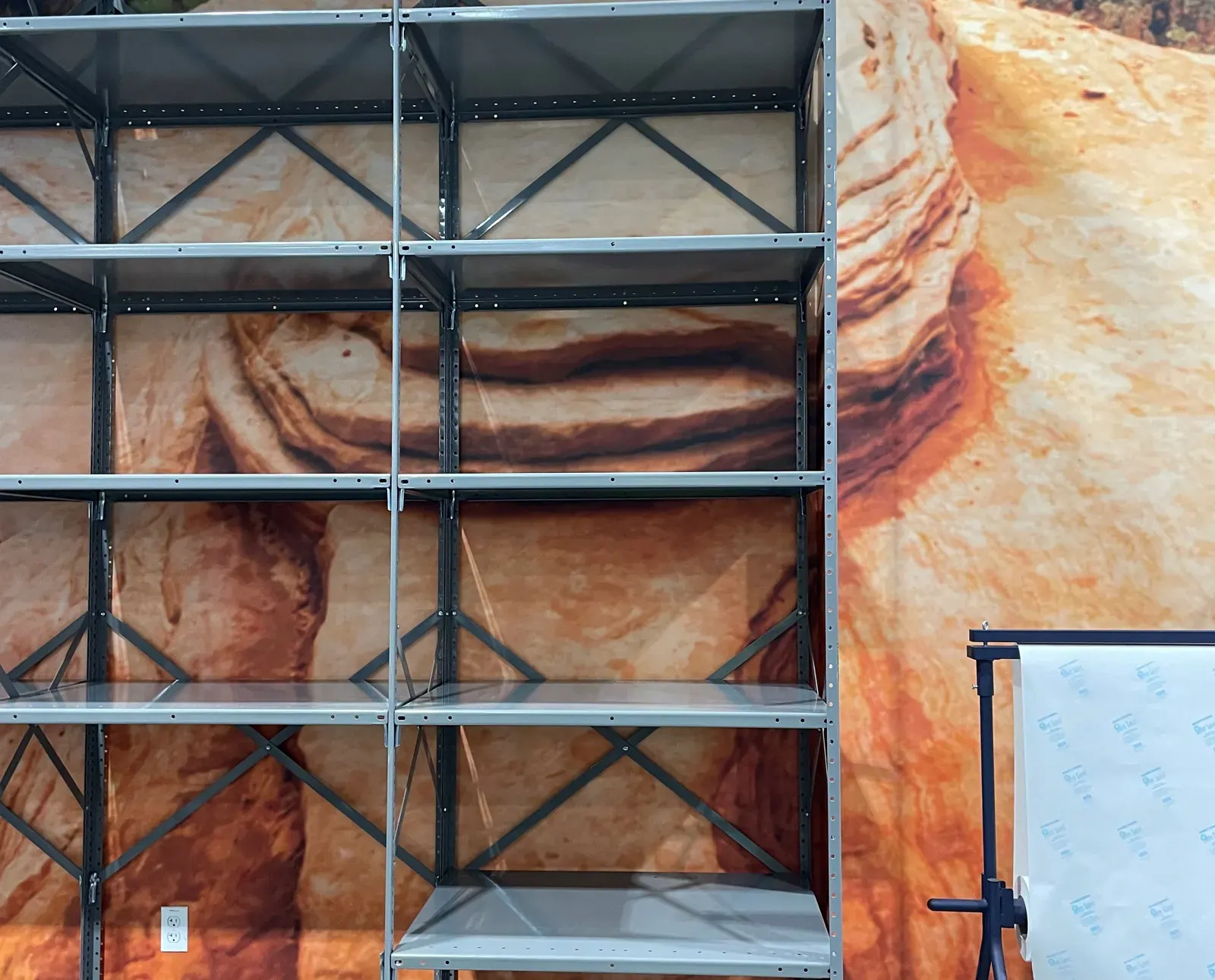 Clip shelving for Veterans Trading Company, Salt Lake City, UTTall X-braced clip shelving for a supply chain firm’s boxed parts, installed 20 days from quote.
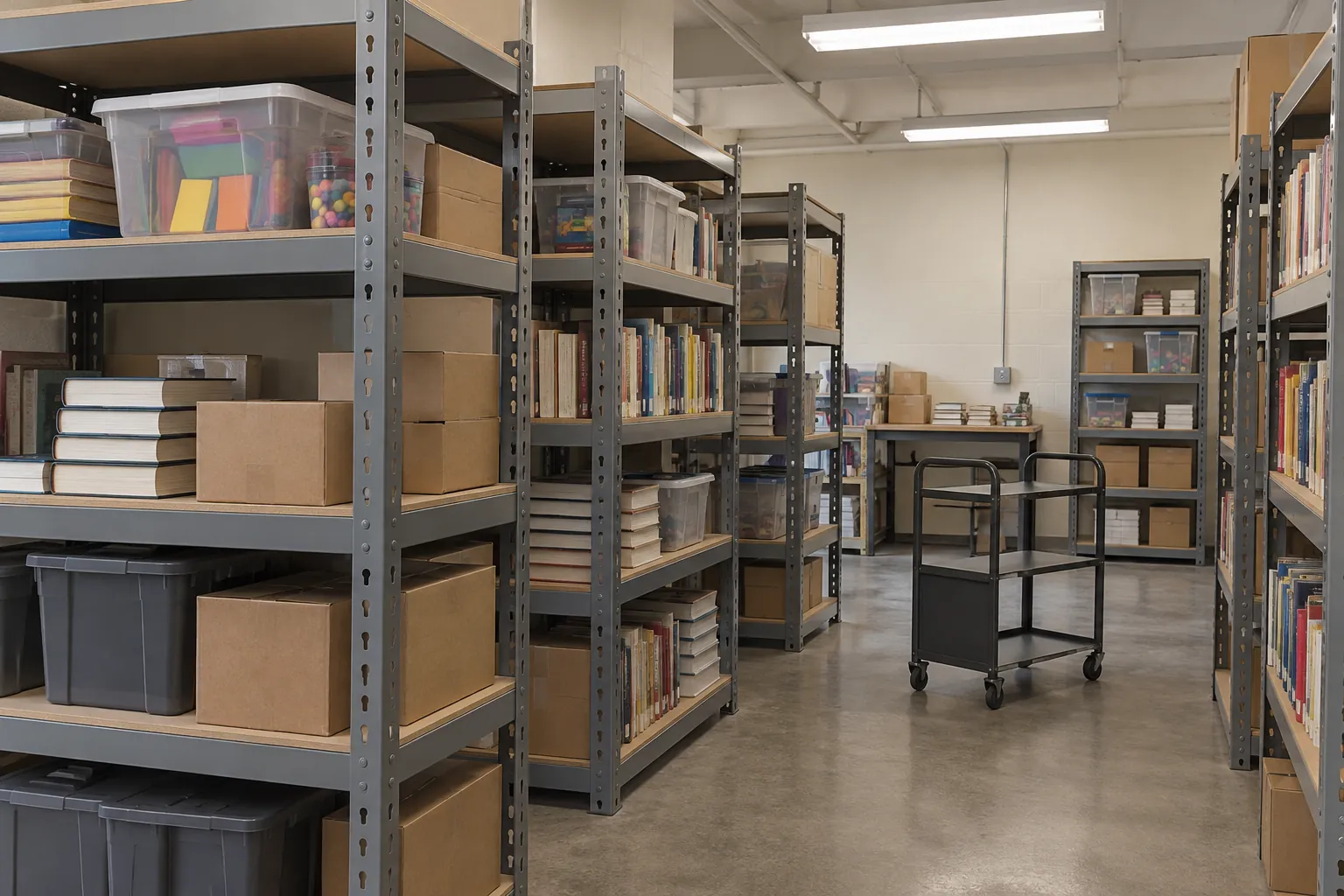 Mixed-depth boltless shelving, Weber County Library, Ogden, UTBoltless units in several depths for a public library back room.
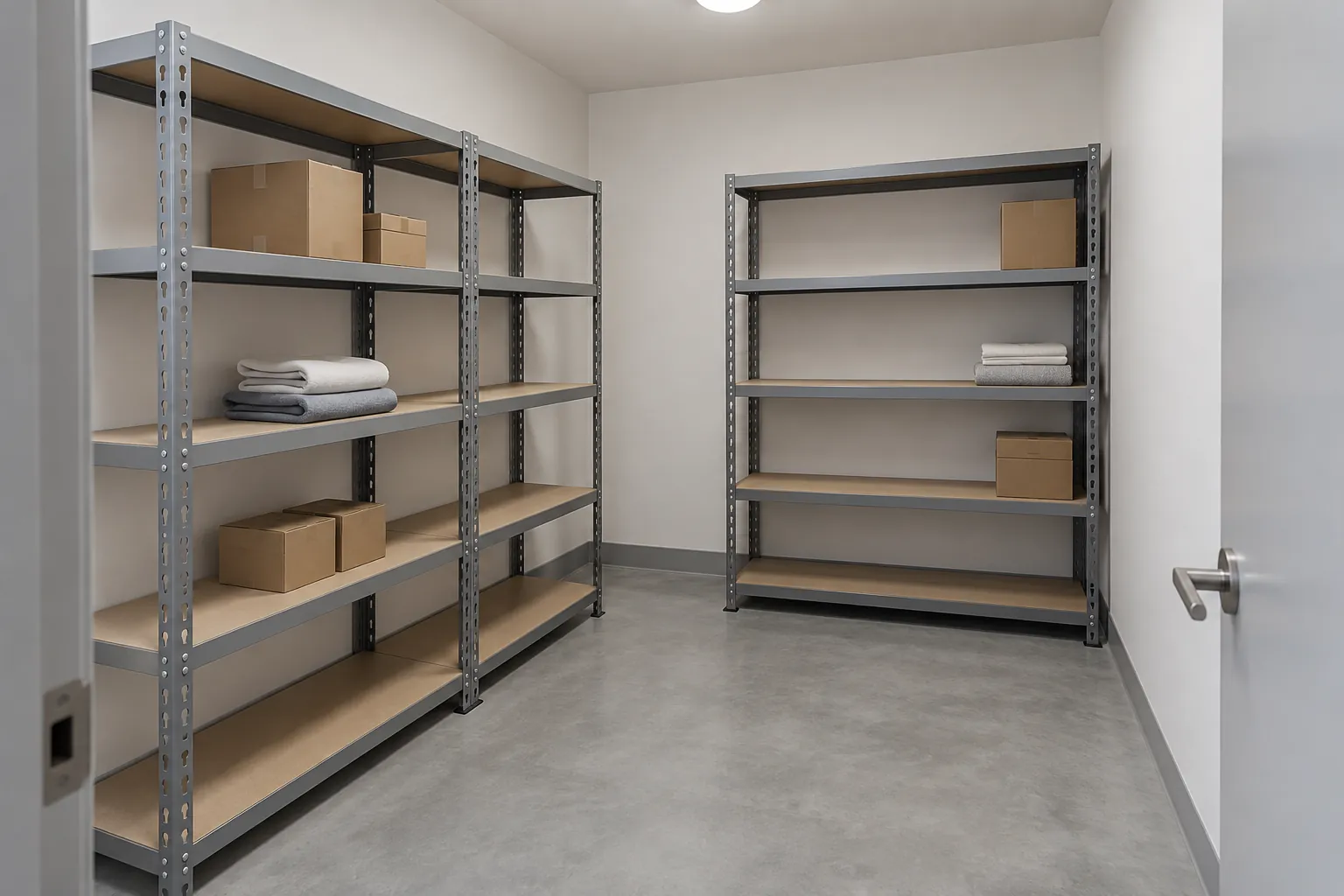 Boltless shelving for Ogden Housing Authority, Ogden, UTBoltless shelving received, delivered and installed in storage rooms on several floors.
Get a free quote
Tell us what you are storing, the room size and your timeline. A project specialist will follow up with layout options and pricing. Prefer to talk? Call (800) 326-4403.
Commercial Shelving FAQs
What is commercial shelving?
What is the difference between commercial and industrial shelving?
What type of commercial shelving is best for a stockroom?
How much weight can commercial shelving hold?
What shelving is best for a commercial kitchen?
Does commercial shelving need to be anchored?
What size commercial shelving do I need?
Do you install commercial shelving?
Planning Commercial Shelving for Your Business?
Send what you store, room dimensions and a few photos for a free layout and a freight-included quote.